
How to Style a White Sweater Vest: 12 Easy Outfit Formulas Plus Winter Layering Tips
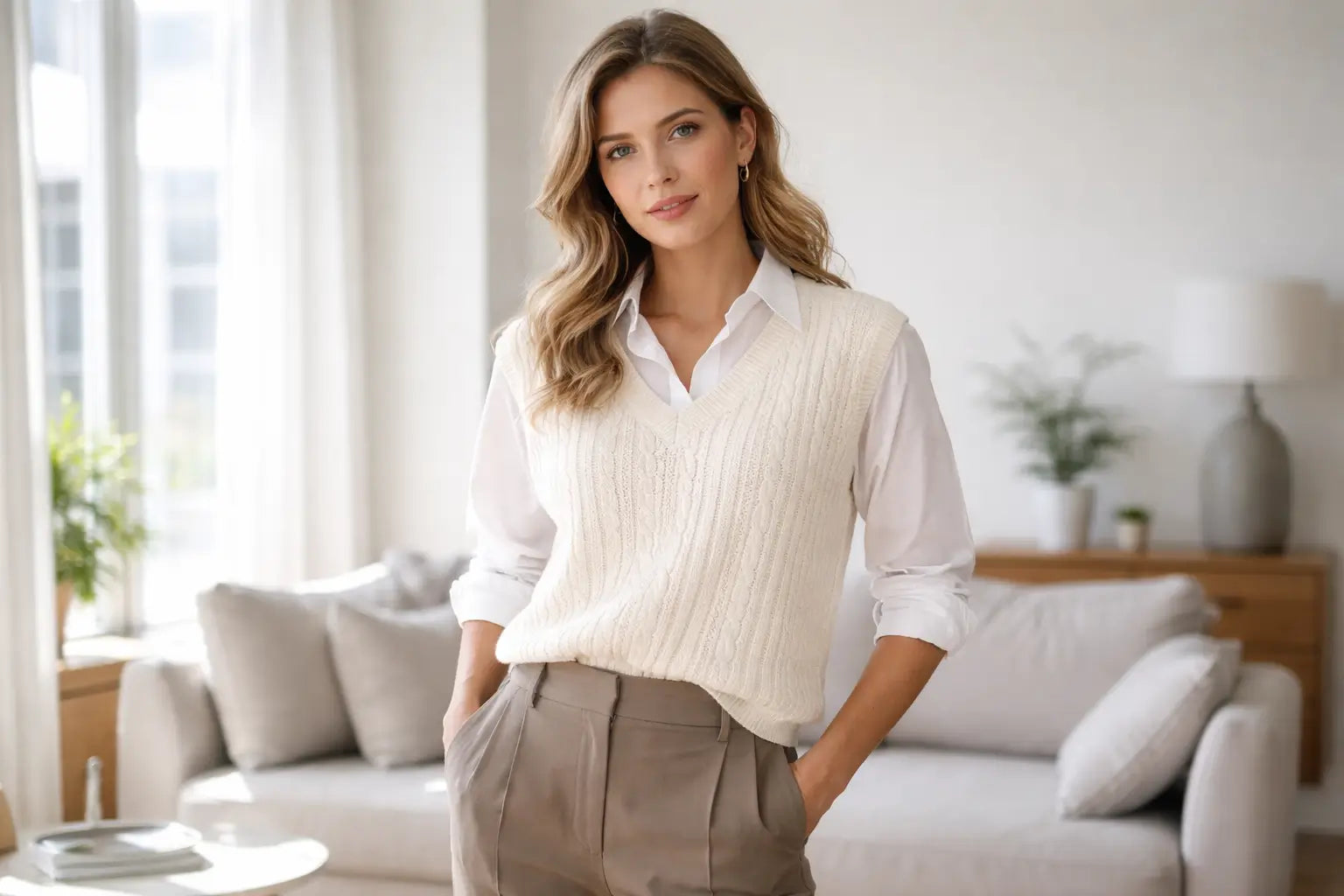
Start with one base layer, one bottom silhouette, and one shoe vibe. If you keep the vest and base clean, you can change the whole outfit by swapping bottoms, shoes, or outerwear.
| If you want… | Wear under the vest | Best bottoms | Shoes | Optional layer | Tuck default |
|---|---|---|---|---|---|
| Easy casual | White or striped tee | Straight jeans | Clean sneakers | Denim jacket | Leave out |
| Polished casual | Light blue button-down | Dark straight jeans | Loafers | Blazer | Half-tuck optional |
| Office-leaning | Crisp button-down | Tailored trousers | Loafers or low heels | Blazer | Tuck if high-rise |
| Winter without bulk | Thin turtleneck | Straight jeans or trousers | Boots | Long coat | Leave out |
| Modern minimal | Fitted long-sleeve tee | Wide-leg trousers | Minimal sneakers | Trench | Leave out |
| Skirt balance | Fine-gauge long sleeve | Midi skirt | Boots or loafers | Coat or blazer | Tuck only if cropped vest |
| Dressy night | Sleek fitted top | Black trousers | Heels or sharp loafers | Structured jacket | Tuck if vest is short |
| Men and unisex classic | OCBD | Chinos | Loafers | Sport coat | Leave out |
12 white sweater vest outfit formulas for modern everyday looks
The fastest way to style a white sweater vest is to use a consistent formula and change only one “knob” at a time: base layer, bottom silhouette, shoe vibe, or outer layer.
Key points:
- White reads clean and “intentional,” so your proportions matter more than loud accessories.
- If the look feels too preppy, swap the collared shirt for a tee and the loafers for sneakers.

Casual weekend formula
A tee under a white sweater vest with jeans and sneakers looks current and effortless.
Key points:
- Keep the tee fitted or neatly tucked to avoid bulk at the waist.
- Choose straight-leg or relaxed jeans for an easy proportion.
Try this:
- Base: fitted tee
- Vest: white sweater vest
- Bottom: straight jeans
- Shoes: clean sneakers
- Optional: denim jacket
Boundary conditions:
- If your vest is oversized, keep the tee slimmer so the outfit doesn’t balloon.
- If your jeans are wide, keep shoes minimal to avoid a heavy look.
Polished casual formula
A button-down + white sweater vest + dark denim is the easiest “put-together” look.
Key points:
- Dark denim reads sharper than light wash for this combo.
- Loafers instantly move it from casual to polished.
Try this:
- Base: light blue or white button-down
- Vest: white sweater vest
- Bottom: dark straight jeans
- Shoes: loafers
- Optional: blazer
Boundary conditions:
- If the collar looks busy, keep it tucked in or choose a smaller collar.
- Fine-gauge vests layer more cleanly than chunky knits.
Office-leaning formula
Pair a crisp shirt with tailored trousers and a structured layer for a smart-casual office outfit.
Key points:
- Tailored trousers make the vest look intentional, not costume-y.
- A blazer gives structure that counters any boxiness from the knit.
Try this:
- Base: crisp button-down
- Vest: white sweater vest
- Bottom: tailored trousers
- Shoes: loafers or low heels
- Optional: blazer
Boundary conditions:
- Office dress codes vary, so treat this as a starting point.
- If you run warm indoors, choose a lighter knit and skip extra layers.
Minimal tonal formula
Cream, white, and soft neutrals create a modern minimal look when you keep silhouettes clean.
Key points:
- Tonal outfits look best when you mix textures (knit + denim, knit + twill, knit + leather).
- Use one darker element to add depth, like a belt or shoes.
Try this:
- Base: off-white fitted long sleeve
- Vest: white sweater vest
- Bottom: beige trousers or ecru denim
- Shoes: minimal sneakers
- Optional: trench
Boundary conditions:
- If everything is the same shade, add texture or a darker shoe so it doesn’t look flat.
- White-on-white can show contrast between pieces under bright light.
Skirt formula
A midi skirt balances the vest’s straight lines and keeps the outfit from feeling too “uniform.”
Key points:
- Pair softer bottoms with a cleaner top line for balance.
- Boots or loafers keep the look grounded.
Try this:
- Base: fitted long sleeve or button-down
- Vest: white sweater vest
- Bottom: midi skirt
- Shoes: boots or loafers
- Optional: coat or blazer
Boundary conditions:
- If the vest is long, consider a half-tuck or a higher-waist skirt to define the waist.
- Pleated skirts add volume, so keep the base layer simple.
Dress layering formula
Layering a vest over a simple dress makes it look styled, not like a last-minute add-on.
Key points:
- Choose a dress with a clean neckline and smooth fabric.
- The vest should sit neatly at the shoulder and armholes to avoid bunching.
Try this:
- Base: knit dress or shirt dress
- Vest: white sweater vest
- Bottom: the dress itself
- Shoes: boots or loafers
- Optional: structured jacket
Boundary conditions:
- If the dress sleeves are bulky, pick a looser vest or a finer knit.
- A cropped vest works best if you want waist definition.
Streetwear formula
A relaxed tee or hoodie under a white sweater vest can work if you keep the rest clean and intentional.
Key points:
- The vest adds “contrast polish” to casual street pieces.
- Keep colors neutral so the outfit doesn’t get noisy.
Try this:
- Base: oversized tee or light hoodie
- Vest: white sweater vest
- Bottom: relaxed trousers or baggy jeans
- Shoes: sneakers
- Optional: bomber or workwear jacket
Boundary conditions:
- Chunky knits plus a hoodie can get bulky fast.
- If the vest is fitted, keep the hoodie lighter and less structured.
Date night formula
Make the vest look dressier by tightening the silhouette and upgrading the shoe.
Key points:
- A sleek base layer reduces visual bulk.
- Dark bottoms create contrast that feels sharper for night.
Try this:
- Base: fitted mock neck or slim top
- Vest: white sweater vest
- Bottom: black trousers or a sleek skirt
- Shoes: heels or sharp loafers
- Optional: structured jacket
Boundary conditions:
- If you choose a chunky vest, keep everything else slim and clean.
- Avoid too many accessories; let the contrast do the work.
Transitional weather formula
For spring and fall, keep the base layer light and add an outer layer you can remove.
Key points:
- A light jacket makes the vest feel seasonal, not just “school-core.”
- Loafers or sneakers work depending on how polished you want to look.
Try this:
- Base: tee or light button-down
- Vest: white sweater vest
- Bottom: straight jeans or trousers
- Shoes: loafers or sneakers
- Optional: trench, chore jacket, or blazer
Boundary conditions:
- If it’s warm indoors, choose a breathable base layer and skip heavy outerwear.
- If the vest is thick, don’t stack too many layers.
Cold weather formula
In colder weather, keep the base layer warm but thin and rely on your outerwear for insulation.
Key points:
- Bulk usually comes from too many thick layers at the armholes.
- Boots help balance winter fabrics and heavier coats.
Try this:
- Base: thin turtleneck or fitted thermal
- Vest: white sweater vest
- Bottom: straight jeans or trousers
- Shoes: boots
- Optional: long coat
Boundary conditions:
- Your coat does most of the warmth work, not the vest.
- Chunky vests usually look best with fewer layers.
Men and unisex classic formula
For a classic men and unisex look, use an OCBD and chinos and keep everything clean.
Key points:
- Clean tailoring reads intentional fast.
- Loafers or minimal sneakers decide the formality.
Try this:
- Base: OCBD
- Vest: white sweater vest
- Bottom: chinos
- Shoes: loafers
- Optional: sport coat
Boundary conditions:
- Slim vests read more classic; relaxed vests read more modern.
- If the collar feels too preppy, switch to a tee.
Men and unisex modern formula
A tee plus relaxed trousers is a modern, minimal way to wear a white sweater vest.
Key points:
- Let the pants carry the silhouette.
- Keep the shoe simple to avoid overstyling.
Try this:
- Base: fitted tee
- Vest: white sweater vest
- Bottom: relaxed trousers
- Shoes: sneakers
- Optional: light coat or overshirt
Boundary conditions:
- If trousers are wide, keep the vest length moderate so it doesn’t overwhelm your torso.
- A fine-gauge vest works best for sleek looks.
Make it look modern in recent seasons
Modern sweater vest outfits usually have cleaner lines and more intentional proportions, not more accessories.
Key points:
- Change one “knob” at a time instead of stacking trends.
- Use contrast or texture, not clutter, for interest.
Quick knobs:
- Swap loafers to sneakers for casual, or sneakers to loafers for polish.
- Go straight-leg to wide-leg bottoms for a more modern silhouette.
- Add structure with a blazer or long coat.
- Mix textures: smooth knit + denim, ribbed knit + twill, knit + leather.
- Keep the base layer clean and fitted if the vest is oversized.
Boundary conditions:
- What looks “modern” depends on your personal style and local dress norms.
- If you prefer classic, keep the silhouette cleaner and skip extreme proportions.
What to wear under a white sweater vest so it stays sleek
The best under-layer is the one that keeps the armholes and waistline clean. If the vest looks bulky, usually your base layer is too thick or too loose.
Key points:
- Fine-gauge knits layer more easily than chunky knits.
- Collars and necklines should look intentional, not crowded.

Base-layer pairing table
| Under-layer | Best for | Why it works | Styling note |
|---|---|---|---|
| Button-down | Office, polished casual | Adds structure and contrast | Keep collar neat; tuck shirt for cleaner waistline |
| Fitted tee | Casual, minimal | Cleanest low-bulk option | Choose a clean neckline and smooth fabric |
| Turtleneck or mock neck | Winter, sleek styling | Adds warmth without extra layers | Works best with V-neck vests or clean crew necks |
| Fitted long sleeve | Transitional weather | More coverage than tee, still slim | Great if you dislike collars |
| Polo or knit top | Preppy, sporty | Collar adds character | Keep the rest minimal to avoid “uniform” vibes |
Boundary conditions:
- If your vest is chunky, choose the thinnest base layer you’re comfortable in.
- White can show contrast; test your base layer in daylight for opacity.
Button-down and collared shirts
A collared shirt is the easiest way to make a white sweater vest look polished, especially for work.
Key points:
- Crisp collars look more intentional than floppy, oversized collars.
- The cleaner the shirt fit, the less bulk you get at the armholes.
Try this:
- Choose a slimmer shirt through the shoulders and sleeves.
- Keep the collar either neatly out or neatly in; avoid the “half messy” middle.
Boundary conditions:
- If your shirt sleeves are bulky, switch to a finer knit vest or a tee-based formula.
- If collars feel too preppy, move to a fitted tee.
T-shirts
A fitted tee under a white sweater vest is the most modern low-effort combo.
Key points:
- Smooth fabrics reduce friction and bunching.
- A clean tee neckline keeps the look current.
Try this:
- Fitted tee + straight jeans + sneakers
- Fitted tee + wide-leg trousers + minimal sneakers
Boundary conditions:
- If the tee is oversized, the vest can look puffy around the armholes.
- If you hate visible tee sleeves, choose a fitted long sleeve instead.
Turtlenecks and mock necks
A thin turtleneck under a white sweater vest is the best winter base when you want warmth and clean lines.
Key points:
- It removes collar fuss and looks sleek under outerwear.
- Dark turtlenecks create strong contrast; light neutrals keep it soft.
Try this:
- Thin turtleneck + vest + straight jeans + boots + long coat
Boundary conditions:
- If you run warm, consider a lighter base layer and rely on a coat for warmth.
- If the vest neckline feels tight, choose a mock neck or crew neck base.
Polo and knit tops
A polo under a sweater vest can look sharp, but it leans preppy fast.
Key points:
- The collar is the statement, so keep everything else simple.
- Works best with tailored trousers or clean denim.
Try this:
- Polo + vest + trousers + loafers
Boundary conditions:
- If the outfit feels too “school uniform,” swap loafers for sneakers and loosen the silhouette.
- Keep patterns minimal if you’re styling around white.
How to wear a white sweater vest in winter without looking bulky
In winter, treat the sweater vest as a styling layer, not your main insulation. Use a thin warm base and let your outerwear do the heavy lifting.
Key points:
- Bulk usually happens at the armholes, shoulders, and waistband.
- Fewer layers with better structure looks warmer and cleaner than many thick layers.

The 5-step winter layering method
Use this order to stay warm and keep the vest looking clean.
Key points:
- Keep the base slim and smooth.
- Keep the vest and coat sizes compatible so nothing binds.
Steps:
- Choose a thin warm base layer that fits close to the body.
- Add the white sweater vest and smooth the armholes and shoulder seams.
- Choose bottoms that match the vest thickness: straight jeans or trousers are the safest.
- Add structured outerwear that doesn’t crush the vest, like a wool coat or structured jacket.
- Finish with boots or closed shoes for visual weight and weather function.
Boundary conditions:
- If your vest is chunky, reduce the thickness of everything under it.
- If your coat is tight, size up outerwear rather than stacking more layers.
Bulk-control checklist
If the outfit feels thick or “puffy,” fix one friction point at a time.
Key points:
- Most bulk is fit-related, not style-related.
- Smooth layers beat thick layers.
Checklist:
- Armholes: if they pull or bunch, switch to a thinner base or a roomier vest.
- Shoulders: align seams; avoid thick shoulder layers under fitted vests.
- Waistline: tuck the base layer cleanly before adding the vest.
- Coat fit: make sure the coat closes comfortably over vest and base.
- Layer count: remove one thick layer and replace it with a structured outer layer.
Boundary conditions:
- Different knits behave differently; some fabrics naturally look thicker.
- Weather severity changes what “works”; warmth needs can override aesthetics sometimes.
Quick winter outfit formulas
These three formulas work in most cold-weather situations without overthinking.
Key points:
- Use contrast to keep the look crisp.
- Keep your base smooth and fitted.
Formulas:
- Thin turtleneck + vest + straight jeans + boots + long coat
- Button-down + vest + trousers + loafers/boots + blazer or coat
- Fitted long sleeve + vest + wide-leg trousers + sneakers + trench
Boundary conditions:
- If it’s wet or snowy, prioritize practical footwear and outerwear.
- If your vest is very thick, the wide-leg bottom usually balances better.
Should a sweater vest be tucked in or left out
Leave it out by default. Tuck only when your bottoms are high-rise and the vest is short enough to sit cleanly at the waist.
Key points:
- The right tuck depends on vest length, knit thickness, and bottom rise.
- A clean waistline looks better than a forced tuck.

Rule of thumb
If the vest covers your waistband and you like the silhouette, leave it out. If it hits at the waistband and looks boxy, consider a tuck or half-tuck.
Key points:
- High-rise bottoms make tucking easier.
- Chunky knits tuck less cleanly than fine knits.
Boundary conditions:
- If the vest has a thick hem, it may bunch when tucked.
- If the vest is long, a full tuck can look forced.
When to tuck
Tuck when you want waist definition and you have the right rise and knit thickness.
Key points:
- Tucking is a proportion tool, not a rule.
- Cleaner tucks come from finer knits.
Good tuck cases:
- Cropped or shorter vest + high-rise trousers
- Fine-gauge vest + tailored pants
- Vest + skirt where you want a defined waistline
Boundary conditions:
- If the knit is thick, try a half-tuck before a full tuck.
- If the waistband is low-rise, a tuck can shorten your torso awkwardly.
When to leave it out
Leave it out when the vest is longer, thicker, or when you want an easy relaxed look.
Key points:
- Untucked works best when the hem sits smoothly and doesn’t flare.
- Straight-leg and wide-leg bottoms pair well with an untucked vest.
Good untucked cases:
- Chunky vest with a tee or thin long sleeve
- Any vest with straight jeans and sneakers
- Winter outfits where you want fewer disruptions at the waist
Boundary conditions:
- If the vest flares at the hem, consider a different bottom silhouette or a structured outer layer.
- If it looks boxy, use the fixes below.
Half-tuck guardrails
Half-tuck works when the knit is thin enough and your bottoms have structure at the waist.
Key points:
- Half-tuck should look intentional, not accidental.
- It’s best with jeans or trousers that hold shape.
How to do it:
- Tuck only the front center lightly, then smooth the knit so it doesn’t bunch.
- Keep the sides clean so the vest doesn’t twist.
Boundary conditions:
- If the vest hem is thick, half-tuck can create a bump.
- If you move a lot, the half-tuck may need readjustment.
If it looks boxy, three fast fixes
You can fix “boxy” by adding structure, changing bottoms, or cleaning the neckline.
Key points:
- Structure beats fussing with the hem.
- One swap can change the whole silhouette.
Fixes:
- Add a blazer, trench, or structured jacket.
- Switch to straighter or wider bottoms for balance.
- Swap to a cleaner base layer with a simpler neckline.
Boundary conditions:
- If the vest is oversized, expect a relaxed silhouette.
- If you want a fitted look, you may need a different vest cut.
The best bottoms to wear with a white sweater vest
Choose bottoms based on your target vibe and the vest’s thickness. Straight jeans and tailored trousers are the safest starting points, while skirts and shorts work best when the rest of the look stays clean.
Key points:
- Bottom silhouette controls proportion more than accessories do.
- If your vest is chunky, straighter or wider bottoms usually balance best.

Bottoms chooser table
| Bottom | Best vibe | Best under-layer | Best shoes | Proportion tip |
|---|---|---|---|---|
| Straight jeans | Easy casual | Tee or fitted long sleeve | Sneakers or loafers | Keep the vest hem smooth and untucked |
| Wide-leg jeans | Modern casual | Fitted tee | Minimal sneakers | Keep the top line clean and fitted |
| Tailored trousers | Office, polished | Button-down or mock neck | Loafers or low heels | Add a blazer for structure |
| Relaxed trousers | Modern minimal | Fitted tee or long sleeve | Sneakers | Keep colors tonal for a clean look |
| Midi skirt | Styled, balanced | Fitted long sleeve | Boots or loafers | Shorter vest or higher waist helps |
| Pleated skirt | Preppy, statement | Clean tee or button-down | Loafers | Keep outerwear structured to avoid “costume” |
| Shorts | Warm-weather intentional | Fitted tee | Sneakers or loafers | Choose a clean short silhouette and simple accessories |
Boundary conditions:
- Season and fabric weight change what feels right.
- If you’re unsure, start with straight jeans or tailored trousers.
Jeans
Jeans are the easiest way to make a white sweater vest feel modern and wearable.
Key points:
- Straight-leg jeans are the best default.
- Wide-leg jeans feel current when the base layer is clean.
Try this:
- Straight jeans + fitted tee + sneakers
- Dark straight jeans + button-down + loafers
Boundary conditions:
- If the vest is long, avoid very skinny jeans if you don’t want a top-heavy look.
- If you wear wide-leg jeans, keep shoes minimal.
Trousers
Trousers make a white sweater vest look intentional and smart, especially with a structured layer.
Key points:
- Tailored trousers are the most office-leaning option.
- Relaxed trousers give a modern minimal vibe.
Try this:
- Tailored trousers + button-down + loafers + blazer
- Relaxed trousers + fitted tee + sneakers + trench
Boundary conditions:
- If trousers are wide, keep the top cleaner and less layered.
- If the vest is thick, choose trousers with enough room to balance.
Skirts
Skirts work best with a clean base layer and a vest length that doesn’t cut you in an awkward spot.
Key points:
- Midi skirts are easiest to style.
- Pleats can look great, but keep the rest simple.
Try this:
- Midi skirt + fitted long sleeve + boots
- Pleated skirt + button-down + loafers
Boundary conditions:
- If the vest is long, a higher-waist skirt helps with proportion.
- If it feels too preppy, switch loafers to sneakers.
Shorts
Shorts with a sweater vest look best when the outfit is clean and intentional, not accidental.
Key points:
- Choose a structured short, not overly slouchy.
- Keep accessories minimal for a modern look.
Try this:
- Tailored shorts + fitted tee + sneakers
- Denim shorts + light button-down + loafers
Boundary conditions:
- Climate matters; vests can feel warm in direct heat.
- White is high-contrast, so keep colors cohesive.
How to style a white sweater vest for the office
For office and smart-casual settings, your best combination is a crisp base layer, tailored bottoms, and a structured outer layer. Shoes decide whether it reads casual or professional.
Key points:
- Fine-gauge knits and clean shirts read more professional than chunky layers.
- A blazer or structured jacket prevents the knit from looking boxy.

The smart-casual build
Build the outfit in this order so the silhouette stays clean.
Key points:
- Fit matters most at shoulders and armholes.
- Choose one “polish lever”: either structured outerwear or sharper shoes.
Steps:
- Base layer: button-down or fitted long sleeve.
- Vest: smooth it at the shoulders and armholes.
- Bottoms: tailored trousers or a midi skirt.
- Outer layer: blazer, structured jacket, or a clean coat.
- Shoes: loafers or low heels for polish; sneakers for a casual office.
Boundary conditions:
- If your office is more formal, keep the palette more neutral and shoes sharper.
- If your office is very casual, you can swap the button-down for a tee.
Swap list
You can shift the entire outfit by swapping one item without rebuilding everything.
Key points:
- Swap shoes first for the biggest change.
- Swap outerwear second for structure.
Swaps:
- More formal: loafers or heels, blazer, darker trousers.
- More relaxed: sneakers, denim, relaxed trousers, lighter outer layer.
Boundary conditions:
- Always match your workplace standards.
- If your vest is chunky, keep the rest simplified.
Best colors, shoes, and accessories with a white sweater vest
White is the easiest color to pair, but your best results come from choosing a consistent contrast level and matching shoe formality to your occasion.
Key points:
- Low contrast looks minimal and polished.
- Higher contrast looks sharper and more intentional.

Color pairing cheat sheet
Use these palettes to decide the “vibe” fast.
Key points:
- Neutrals look clean and modern.
- Denim and earth tones look casual and approachable.
Palettes:
- Neutrals: cream, beige, gray, black for a clean minimal look.
- Denim: blue denim + white for an easy everyday combo.
- Earth tones: olive, brown, tan for warmth and softness.
- Black: white vest + black bottoms for sharp contrast and night-ready styling.
Boundary conditions:
- White can show contrast through thinner knits; test under-layers in bright light.
- If you prefer softer contrast, choose ivory or cream tones elsewhere.
Shoe chooser
Pick shoes based on whether you want casual, polished, or winter-ready.
Key points:
- Sneakers read casual and modern.
- Loafers read polished and preppy.
- Boots read winter and grounded.
Chooser:
- Sneakers: casual weekend, modern minimal, streetwear.
- Loafers: polished casual, office, classic preppy.
- Boots: winter outfits, skirts, coats, heavier knits.
- Heels: dressy nights, office outfits that need a sharper finish.
Boundary conditions:
- Weather can override style; choose practical footwear first.
- If the outfit feels too preppy, switch loafers to sneakers.
Three elevation moves
Small accessories work best because the vest already adds texture.
Key points:
- One accessory is usually enough.
- Choose structure over sparkle for a modern look.
Moves:
- Add a belt to define the waist when your bottoms are high-rise.
- Choose a structured bag for polish.
- Add simple jewelry to keep the look intentional.
Boundary conditions:
- If the outfit already has strong contrast, keep accessories minimal.
- If you’re going tonal, accessories can add depth.
White sweater vest outfits for men and unisex looks
Men and unisex styling is easiest when you decide whether you want classic tailoring or modern casual. Your base layer and shoes do most of the signaling.
Key points:
- OCBD + loafers reads classic and smart.
- Tee + sneakers reads modern and relaxed.

Classic
The classic look is all about clean layers and simple tailoring.
Key points:
- Keep the shirt crisp.
- Keep pants structured.
Try this:
- OCBD + white sweater vest + chinos + loafers
- Optional: sport coat for extra structure
Boundary conditions:
- If you dislike the preppy vibe, switch to a tee.
- If the vest is slim, keep the shirt fit clean to avoid pulling.
Modern casual
A tee and relaxed trousers make the vest feel current.
Key points:
- Let the pants shape the silhouette.
- Keep colors neutral for a modern look.
Try this:
- Fitted tee + white sweater vest + relaxed trousers + sneakers
- Optional: coat or overshirt
Boundary conditions:
- If trousers are very wide, keep the vest length moderate.
- If your vest is oversized, keep the tee more fitted.
Dressier option
Tailoring plus a cleaner shoe can make the vest work for dinner and events.
Key points:
- Dark trousers increase contrast and sharpness.
- Clean shoes elevate the whole look.
Try this:
- Button-down + vest + dark tailored trousers + loafers
- Optional: blazer or structured jacket
Boundary conditions:
- Event dress codes vary; use this as a smart-casual base.
- If the vest is chunky, keep the rest sleek.
How to choose a white sweater vest that is easy to style
Choose a vest that fits cleanly at the shoulders and armholes, and pick knit thickness based on whether you want layering flexibility or a statement texture.
Key points:
- Shoulder and armhole fit control bulk more than length does.
- Fine-gauge knits are the easiest for layering, while chunkier knits are more statement and need simpler styling.
Fit checklist
If the vest fits well at the top, it will style well across many outfits.
Key points:
- Fit is easiest to evaluate at shoulders and armholes.
- Length determines tuck options and waist definition.
Checklist:
- Shoulders sit flat without pulling.
- Armholes do not gape excessively and do not pinch.
- Hem hits where you like it relative to your waistband.
- Neckline works with your preferred base layers.
Boundary conditions:
- “Best fit” depends on your preferred silhouette.
- If you want to layer thick shirts, you may need more room.
Knit thickness in plain language
Thinner knits are easier to layer and tuck, while thicker knits look cozier but can add volume.
Key points:
- Fine knits pair well with blazers and office looks.
- Chunky knits look best with fewer layers and simpler lines.
How to choose:
- If you want office and layering: choose a smoother, thinner knit.
- If you want cozy casual: choose a thicker knit, then keep the base layer slim.
Boundary conditions:
- Different yarns and constructions change how thick a vest feels even at the same visual texture.
- If you’re sensitive to bulk, prioritize fit and layer count over “extra warmth.”
Common styling mistakes and quick fixes
Most sweater vest styling issues come from bulk at the armholes or unbalanced proportions. Fix those first before changing the entire outfit.
Key points:
- Fix structure and proportion before adding accessories.
- One smart swap is better than five small tweaks.
Mistakes and fixes:
- Bulky armholes: switch to a thinner base layer or a roomier vest cut.
- Messy shirt hem: tuck the shirt cleanly, then smooth the vest; or switch to a fitted tee.
- Too preppy: replace button-down with a tee, and loafers with sneakers.
- Boxy silhouette: add a structured layer, switch bottoms to straight or wide, or choose a shorter vest length.
Boundary conditions:
- White opacity varies by knit and under-layer; test in daylight.
- Care depends on the garment label; avoid assuming all vests wash the same way.
Sweater vest vs suit vest vs knit tank quick definitions
A sweater vest is knitwear designed for layering or casual styling, while a suit vest is tailored for suiting. Knit tanks are usually lighter and closer to a top than a layering piece.
Key points:
- Sweater vest: knit texture, casual-to-smart-casual layering.
- Suit vest: tailored fabric, worn with suits and formal outfits.
- Knit tank: lighter knit, often styled as a top.
Boundary conditions: Retailer naming varies; use construction and styling intent to decide.
FAQ: white sweater vest styling questions
These are the most common “quick decision” questions people ask when styling a white sweater vest.
Key points:
- Each answer is short and practical.
- If you want more examples, use the outfit formulas section above.
How to wear a white vest in winter
Use a thin warm base, keep layers smooth, and rely on a coat for insulation.
Key points:
- Thin base layer reduces bulk at armholes.
- Boots and a long coat balance winter weight.
Steps:
- Thin turtleneck or fitted long sleeve
- White sweater vest
- Straight jeans or trousers
- Long coat
- Boots
Boundary conditions:
- If your vest is chunky, reduce layer thickness under it.
- Adjust outerwear for your climate.
Should sweater vests be tucked in or out
Leave it out by default. Tuck only if you have high-rise bottoms and a shorter, thinner vest.
Key points:
- High-rise bottoms help tucks look clean.
- Chunky knits usually look better untucked.
Boundary conditions:
- If the hem is thick, avoid a full tuck to prevent bunching.
- If you want waist definition, try a half-tuck first.
What bottoms to wear with a sweater vest
Direct answer: Start with straight jeans for casual or tailored trousers for polished. Choose skirts for a styled look and shorts for warm-weather intention.
Key points:
- Straight jeans are the easiest default.
- Tailored trousers are the easiest office default.
Boundary conditions:
- Season changes fabric choices.
- Chunky vests pair best with straighter or wider bottoms.
How to style a sweater vest in 2025
The most reliable “current” approach is clean layers, intentional proportions, and one modern silhouette choice, like wide-leg pants or a structured outer layer.
Key points:
- Use a fitted base under an oversized vest.
- Use a structured jacket to avoid boxiness.
Boundary conditions:
- Trends vary by city and personal style.
- If you prefer classic, keep the silhouette cleaner and skip extreme proportions.
What do you wear under a white sweater vest
A fitted tee is the easiest casual base, a button-down is the easiest polished base, and a thin turtleneck is the easiest winter base.
Key points:
- Keep sleeves and shoulders slim to reduce bulk.
- Collars and necklines should look neat and intentional.
Boundary conditions:
- Thicker vests require thinner bases.
- White may show contrast; test base layers in bright light.
What are common sweater vest styling mistakes and fixes
The most common problems are bulk at the armholes and unbalanced proportions. Fix those before changing the whole outfit.
Key points:
- Bulk fix: thinner base or roomier armholes.
- Proportion fix: change bottoms or add structure.
Quick fixes:
- Add a blazer or trench for structure.
- Switch bottoms to straight or wide to balance the torso.
- Swap loafers to sneakers if it feels too preppy.
Boundary conditions:
- Fit preferences vary; not everyone wants a fitted silhouette.
- Different knits behave differently.
Quick recap
If you remember only three things, remember this: keep the base layer clean, balance proportions with your bottoms, and use shoes or outerwear as your main “vibe switch.”
Key points:
- Straight jeans and tailored trousers are the easiest bottoms to start with.
- Fine knits layer and tuck more easily than chunky knits.
- In winter, rely on outerwear for warmth and keep under-layers thin.
For brands sourcing custom white sweater vests
If you want to develop a white sweater vest for your collection, write down your fit and knit decisions first. It will make sampling faster and reduce back-and-forth.
Key points:
- “Fit + knit thickness + neckline” are the three decisions that most affect styling and bulk.
- MOQ, lead time, and shipping details can vary by design, yarn availability, and order quantity.
Quick spec checklist to prepare:
- Target customer: women, men, unisex
- Size range and grading expectations
- Fit: cropped, regular, oversized and target body length
- Neckline: V-neck or crew
- Armhole preference: standard or deeper armhole
- Knit look: smooth, rib, cable and desired thickness
- Color tone: bright white vs soft ivory
- Labels and packaging needs
- Order quantity by size and target ship date
