
Sweater With Long Skirt Outfit: 12 Easy Looks + No-Bulk Proportion Rules
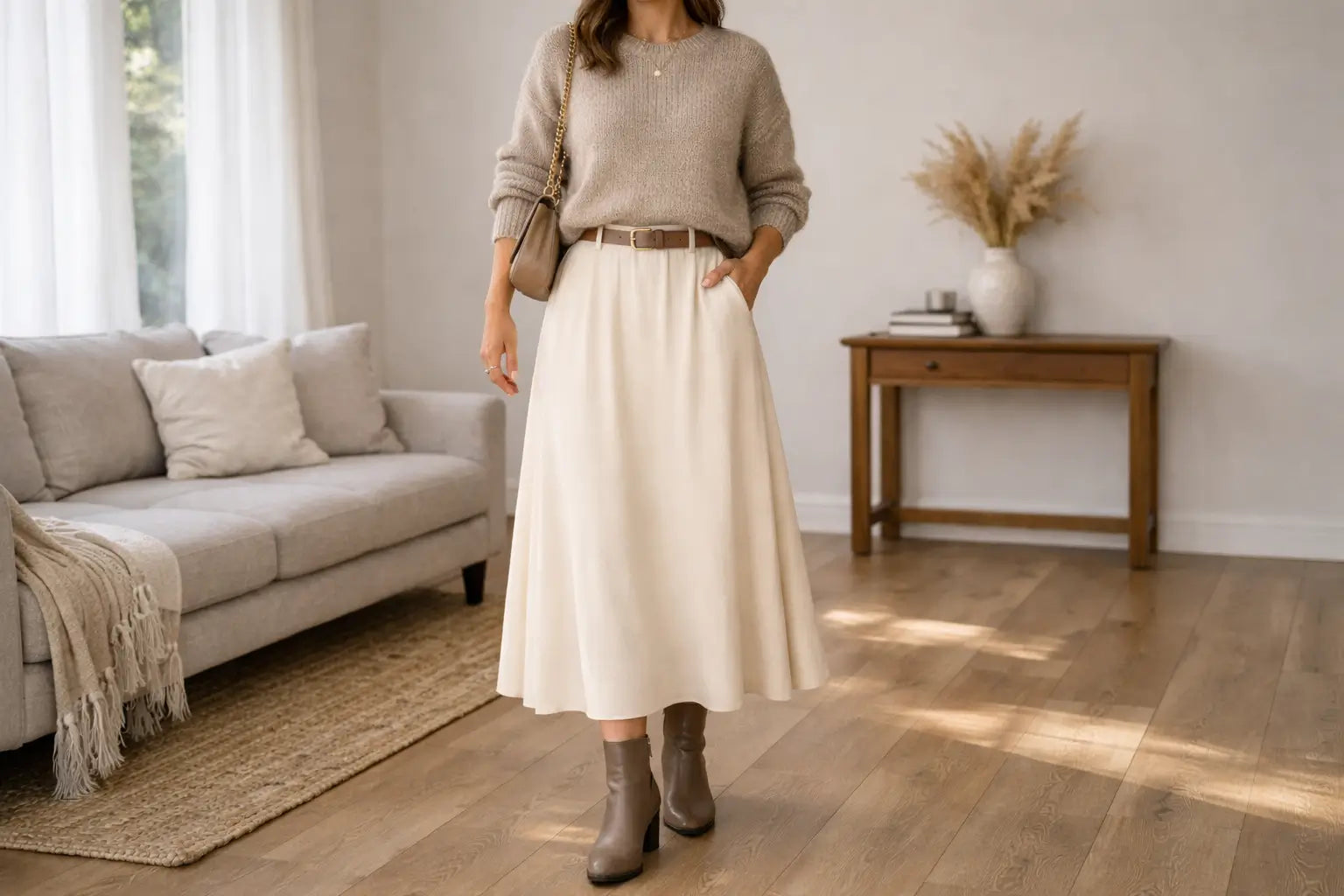
If you want a sweater-with-long-skirt outfit that feels modern (not bulky), the trick is to balance volume, define your waistline on purpose, and finish the hem with the right shoes. For extra inspiration, these editorials show common sweater-and-skirt formulas: InStyle (winter sweater + skirt outfit formulas), Who What Wear (midi skirt + jumper outfits), and Neiman Marcus (sweater + skirt ideas).
Sweater + Long Skirt Outfit Formula (No-Bulk Rules)
Yes—you can absolutely wear a sweater with a long (midi/maxi) skirt. The most “no-bulk” version usually comes from balancing one relaxed piece with one cleaner line, then adding a deliberate waist and shoes that don’t visually “fight” the hem.

Key points (quick rules):
- If the skirt is flowy/full, go sleeker on top (fine knit, clean hem, or a partial tuck).
- If the sweater is chunky/oversized, pick a skirt with a cleaner line (less volume, smoother fabric, or a defined waist).
- Put the “break” at a flattering spot: cropped, half-tucked, or belted (depending on knit thickness).
- Let the hem and shoes agree: sleeker shoes often read more intentional with very long hems.
- Keep one element simple: if your skirt has shine/print/texture, choose a calmer sweater shape.
Boundary conditions (what it depends on):
- A fluid satin slip skirt and a stiff denim maxi behave very differently under the same sweater.
- Chunky knits don’t tuck the same way fine knits do; you may need a half-tuck or belt-over approach.
A fast way to decide is to pick your skirt fabric first, then choose the sweater shape that matches its drape.
The 3-step outfit formula (skirt → sweater → waist → shoes)
Build the outfit in this order so proportions stay under control.
Steps:
- Choose the skirt “line” (flowy vs straight, high waist vs mid waist).
- Match sweater volume to the skirt (one relaxed, one cleaner).
- Define the waist on purpose (crop/half-tuck/belt), then pick shoes that suit the hem and the occasion.
Boundary conditions:
- Cold weather adds layers—plan outerwear length and boot height early so you don’t add bulk at the waist.
This becomes much easier once you know where your sweater should end on your torso.
Proportion Rules: Choose Sweater Length + Volume for Midi/Maxi Skirts
For most midi/maxi skirts, the most reliable proportion is a sweater that ends at the waist or just above the widest hip point, plus a waist-defining move (crop, half-tuck, or belt) when needed.

Key points (what to prioritize):
- Hem placement beats “size”: where the sweater ends changes the whole silhouette.
- One volume at a time: pair a chunky/oversized sweater with a cleaner skirt line, or pair a flowy skirt with a sleeker sweater.
- High-waist skirts are the easiest: they give you a clear place to crop/tuck and keep the outfit intentional.
- Fine knits = easier tucks: chunky knits often look cleaner with a half-tuck or belt-over.
How to apply it (quick rules):
- With a maxi skirt: aim for a defined waist (cropped or half-tucked) so the outfit doesn’t become one long column of fabric.
- With a midi skirt: you can do hip-length sweaters more easily, especially if the skirt is straighter and your shoes add structure (boots/loafers).
Boundary conditions:
- Very clingy skirts (especially satin) can show sweater bulk; choose a smoother knit or keep the sweater volume controlled.
- Skirt waistband style matters (elastic vs structured) for how clean a tuck looks.
If you’re deciding between cropped, hip-length, and oversized, the mini-table below makes it quick.
Mini-table: Cropped vs hip-length vs oversized (best use cases)
| Sweater length | Best when your skirt is… | Why it works | Waist move that usually helps |
|---|---|---|---|
| Cropped (true waist) | maxi or full midi | Creates a clear waistline and keeps the skirt from “dragging” the look down | No tuck needed; optional belt if skirt is mid-rise |
| Hip-length (clean hem) | straighter midi/maxi, denim, pencil-ish lines | Keeps warmth and coverage while maintaining a visible shape | Small front tuck or belt if it looks boxy |
| Oversized | slimmer/cleaner skirt line, structured fabric | Lets the sweater be the statement without stacking volume | Half-tuck, belt-over, or open layer (jacket) |
Boundary conditions:
- If the skirt is very fluid/clingy, reduce top bulk
Once the sweater length is set, the tuck/belt technique is what makes the outfit look polished rather than “thrown on.”
Process: How to Tuck or Belt a Sweater Into a Long Skirt (Neat, Not Bulky)
Use a tuck or belt to create a clear waistline, but match the method to your knit thickness and skirt waistband so you don’t create a bulky lump.

Key points (pick one method):
- Full tuck = best for fine knits + structured waistbands
- Half-tuck (front tuck) = best for medium knits + most skirts
- Belt-over = best for chunky knits when tucking looks bulky
Steps (fast and repeatable):
- Smooth the base: pull the skirt waistband into place first (high or mid rise).
-
Choose your tuck:
- Fine knit: tuck all around, then gently “blouse” a little fabric out for ease.
- Medium knit: tuck only the front center, leaving sides/back relaxed.
- Chunky knit: skip the tuck; belt over the sweater or use a shorter outer layer.
- Check the side view: if the waist looks bulky, reduce fabric at the waistband (less tuck, thinner knit, or belt-over).
- Lock the line with shoes: a clean shoe shape keeps the outfit from looking heavy.
Boundary conditions:
- Elastic waistbands can bunch; a half-tuck is often cleaner than a full tuck.
- Very thick belts can add bulk; a slimmer belt is usually easier on chunky knits.
If the outfit still reads “frumpy” after you define the waist, it’s usually a fixable mismatch of volume, fabric, or hem-to-shoe balance.
Risks: If It Looks Frumpy or Bulky, Fix This (Problem → Fix Checklist)
Most “frumpy/bulky” sweater + long skirt outfits come from stacking volume in the same place (waist/hips) or mixing two clingy/heavy fabrics. A few quick swaps usually solve it.
Key points (fastest fixes):
- Add a half-tuck (or switch to a cropped sweater).
- Swap to a finer knit (or a skirt with a cleaner line).
- Change shoes to a sleeker profile that matches the hem.
Problem → Fix checklist (use like a diagnosis):
| Problem you see | Likely cause | Quick fix (try first) |
|---|---|---|
| “One big shapeless column” | No waist definition | Half-tuck, cropped sweater, or belt-over |
| Waist looks bulky | Too much knit tucked in | Switch to half-tuck, finer knit, or belt-over |
| Hips look heavy | Both pieces are voluminous | Keep only one voluminous piece; slim the other |
| Skirt clings in an unflattering way | Fluid fabric + bulky knit | Use smoother/finer knit; add a structured layer (jacket) |
| Outfit looks “messy” | Competing textures/prints | Keep one statement; simplify the other piece |
| Maxi hem feels dragging | Hem + shoe mismatch | Sleeker shoes, slightly shorter hem, or a defined waistline |
| You feel “boxy” in oversized knits | Volume sits at widest point | Swap to a cleaner skirt line or add a waist move |
| Waistline feels “not smooth” | Fabric bunching at waistband | Half-tuck + smooth base layer; avoid thick tucks |
Boundary conditions (gentle, realistic):
- Comfort matters—if belts or tight knits aren’t your thing, choose structure via outerwear or skirt fabric instead.
- Some fabrics show lines more easily; “smoother” results often come from adjusting materials and fit, not forcing tightness.
Once the silhouette is under control, you can choose outfit ideas by skirt type and get consistent results faster.
Options Table: Best Sweaters for Each Long Skirt Type (Pleated / Satin Slip / Denim / Knit)
Match skirt drape to knit weight: fluid skirts often look best with cleaner, smoother knits, while structured skirts can handle chunkier sweaters.

Key points (pairing logic):
- Fluid + shiny (satin/slip) usually prefers fine, smooth knits and a clear waist.
- Structured (denim) can take chunky knits and heavier shoes.
- Pleats like a sweater that doesn’t “fight” the folds—either neat and tucked, or cropped.
- Knit skirts can look very “set-like”; keep at least one line clean (waist or hem).
Comparison table (quick decisions):
| Skirt type | Sweater that often works well | Why it works | Shoes that match easily |
|---|---|---|---|
| Pleated midi/maxi | Cropped knit, fine knit with half-tuck | Keeps pleats visible; prevents bulk at waistband | Ankle boots, loafers, sleek sneakers |
| Satin/slip maxi | Fitted rib knit, fine turtleneck, clean crewneck | Smooth knit + fluid skirt reads intentional and modern | Heels, slim boots, minimal sneakers |
| Denim midi/maxi | Chunky crewneck, oversized knit (with waist move) | Denim can “hold” the outfit; chunky textures feel balanced | Combat/ankle boots, sneakers, loafers |
| Knit maxi/midi | Matching knit top (tonal) or clean fine knit | Texture continuity can feel set-like; easy to elevate with details | Sleek boots, loafers, low heels |
12 easy looks (mix-and-match formulas):
- Fine crewneck + satin slip maxi + slim ankle boots
- Fitted turtleneck + satin slip maxi + heels (clean lines)
- Cropped sweater + pleated maxi + loafers (polished day look)
- Fine knit + pleated midi + knee-high boots (winter-ready)
- Chunky cable knit + denim maxi + combat boots (structured casual)
- Oversized sweater (half-tucked) + denim midi + sneakers (weekend)
- Fine rib sweater + knit maxi + sleek boots (set-like minimal)
- Tonal sweater + knit skirt + low heels (elevated “set”)
- Mock neck sweater + pleated midi + ankle boots (office-friendly)
- Slim sweater + printed maxi + simple shoes (let print lead)
- Cropped cardigan + flowy maxi + flats/loafers (spring layering)
- Chunky sweater + straighter maxi + knee-high boots (balanced volume)
Boundary conditions:
- Climate changes knit choice—if you need warmth, layer smartly rather than forcing a bulky tuck.
- For very clingy skirts, a smoother knit and a cleaner waist usually looks more intentional.
Shoes are the fastest way to change the vibe of the same sweater-and-skirt combo.
Shoes Cheat Sheet: Sneakers, Boots, Loafers, Heels (What Works When)
Pick shoes based on the outfit’s vibe (casual vs polished) and the skirt hem (midi vs maxi), then keep one clean line so the look feels intentional.

Key points (shortlist by vibe):
- Casual: sleek sneakers, loafers
- Polished: ankle boots, low heels, pointed flats
- Winter: knee-high boots, weather-ready ankle boots
Quick guidance (what works when):
- Sneakers: work best when the sweater/skirt is otherwise clean and simple (solid colors, controlled volume).
- Ankle boots: easy default with midi skirts; with maxi hems, choose a cleaner boot shape so the hem doesn’t look heavy.
- Knee-high boots: great for cold weather and for adding structure; pair with a midi or a maxi that’s not too clingy.
- Loafers: ideal for office-leaning outfits with a neat sweater hem or tuck.
- Heels: instantly elevate satin/slip skirts and finer knits.
Boundary conditions:
- Weather and walking needs can override aesthetics; choose function first, then balance with sweater volume or a clearer waistline.
If you’re dressing for cold weather, planning tights and outerwear early prevents bulk at the waist.
Process: Cold-Weather Layering Without Bulk (Tights, Coats, Boots)
To stay warm without looking bulky, keep bulk away from the waist and use outer layers to add warmth while keeping your sweater/skirt silhouette readable.

Key points (low-bulk principles):
- Warmth is easiest to add under or over the outfit—not by stuffing a thick sweater into the waistband.
- A fine knit + base layer often looks cleaner than a single very chunky sweater.
- Coat length changes the silhouette: cropped coats emphasize the waist; longer coats create a continuous line.
Steps (build the winter version):
- Base layer: thin thermal top if needed (keep it smooth).
- Choose your knit: fine-to-medium knit is easiest if you’ll be tucking.
- Add warmth at the legs: tights/leggings under the skirt depending on comfort.
-
Outerwear: pick coat length that matches your goal:
- Cropped jacket = more waist emphasis
- Mid-length coat = balanced
- Long coat = streamlined column
- Boots: add structure (ankle or knee-high) and match the hem.
Low-bulk swap checklist:
- Swap chunky tuck → half-tuck or belt-over
- Swap bulky belt → slimmer belt
- Swap short coat + long skirt (if it chops you) → mid/long coat
- Swap heavy shoes → sleeker boots for very long hems
- Swap multiple thick layers → one smooth base layer + cleaner knit
Boundary conditions:
- Indoor heating can make heavy knits uncomfortable; a layered fine knit is often more adaptable.
- Clingy skirts can show layers; smoother base layers reduce visible lines.
Once warmth is handled, color choices and small details are what make the outfit feel styled, not just practical.
Options: Color Formulas That Look Intentional (Monochrome, Tonal, Accent)
The easiest way to make sweater + long skirt look intentional is to repeat a color (or a texture) on purpose, then keep the rest calm.
Key points (simple formulas):
- Repeat one thing: color, texture, or detail (like a trim line).
- If the skirt is loud (shine/print), keep the sweater silhouette simpler.
Color formulas you can copy:
- Monochrome: same color family top + skirt (vary texture to add depth).
- Tonal neutrals: cream + oatmeal, charcoal + black, camel + chocolate.
- Neutral + accent: black/cream base with one accent (bag or shoes).
- Print + solid: printed skirt + solid knit that matches one color in the print.
- Light top + dark skirt: classic, easy, and office-friendly.
- Dark top + light skirt: feels crisp; keep shoes simple.
- Texture contrast: matte knit + shiny skirt (or vice versa) with matching colors.
Quick “unify it” fix:
- Repeat one color in two places (e.g., sweater + shoes, or skirt + bag) so it reads intentional.
Boundary conditions:
- High-contrast combos feel bolder; simplify the silhouette and accessories to keep it wearable.
If you want the same outfit to work for office, weekend, and date night, you usually only need to change one or two levers.
Options by Scenario: Office, Weekend, Date Night (What to Change)
Use the same sweater-and-skirt base, then adjust just fit, shoe, and accessories to match the occasion.

Key points (what changes the vibe fastest):
- Shoes (loafers vs sneakers vs heels)
- Knit texture (fine rib vs chunky cable)
- Accessories (minimal vs statement)
Office (work-appropriate):
- Sweater: fine knit, clean crewneck or turtleneck
- Skirt: midi/maxi with a cleaner line (pleats or straight drape)
- Shoes: loafers or ankle boots
- Detail: one structured accessory (belt, structured bag)
Weekend casual:
- Sweater: relaxed fit or chunky knit
- Skirt: denim or pleated midi
- Shoes: sleek sneakers or flat boots
- Detail: simple layering (denim jacket, cropped coat)
Date night / evening:
- Sweater: fitted rib knit, off-shoulder style, or a cleaner cropped knit
- Skirt: satin/slip or a fluid maxi
- Shoes: heels or sleek boots
- Detail: statement earrings or a defined waist
Boundary conditions:
- Workplace dress codes vary; if you’re unsure, keep textures and accessories more conservative.
If you like the “put-together” feeling of a matching set, a few design cues can make separate pieces look coordinated.
Elevation: Make It Look Like a Coordinated Set (Texture, Trim, Details)
A sweater + long skirt looks like a coordinated set when you match one strong cue (color, texture, or trim) and keep the rest consistent (clean hems, repeated details, cohesive accessories).

Key points (set-like cues you can use):
- Match texture (rib-to-rib, smooth-to-smooth) even if colors differ slightly.
- Match tone (same color family) even if textures differ.
- Repeat one detail: rib width, trim line, button color, or hardware tone.
- Keep hems clean: messy hems make even a matched palette look accidental.
A simple rule that works:
- Match one of these strongly: color OR texture OR trim, then add a small contrast in shape OR sheen so it doesn’t look flat.
Polished detail checklist:
- Rib/trim looks intentional (not random mixing)
- Neckline matches the vibe (crew/neck for day, higher neck for sleekness, etc.)
- Hardware tones match (bag hardware + belt buckle + jewelry)
- Shoes don’t compete with the hem (one clean line)
Boundary conditions:
- Head-to-toe matching can feel flat; add contrast with sheen (matte knit + satin skirt) or shape (cropped top + flowing skirt).
If you have specific skirt fabrics in mind, the FAQ below answers the most common “does this work?” questions quickly.
FAQ: Sweater With Long Skirt Outfit (8 Quick Answers)
-
Q: Can you wear a sweater with a long skirt?
A: Yes. The cleanest version usually comes from balancing volume (one relaxed piece, one cleaner line) and adding a deliberate waist definition (crop/half-tuck/belt). -
Q: How can I wear a long skirt without looking frumpy?
A: Start by defining the waist (half-tuck, cropped sweater, or belt-over). If it still feels off, reduce volume in either the sweater or the skirt and choose a sleeker shoe shape for very long hems. -
Q: How to not look frumpy in a sweater?
A: Pick one statement (either the sweater’s chunkiness or the skirt’s volume) and keep the other piece simpler. A neat hem (or partial tuck) plus a structured shoe usually makes the outfit feel intentional. -
Q: How to hide tummy in a long skirt?
A: A higher-rise skirt plus a half-tuck (or cropped sweater) often creates a cleaner waistline. If fabric bunching is the issue, reduce bulky tucks and choose smoother knits or a belt-over method instead. -
Q: What sweater length works best with a maxi skirt (cropped vs regular vs oversized)?
A: Cropped or waist-defined styles are often easiest with maxi skirts because they keep the silhouette clear. Hip-length and oversized sweaters can work too—especially with cleaner skirt lines—if you add a half-tuck or belt-over to avoid bulk at the waistband. -
Q: How do you tuck a sweater into a skirt neatly (full tuck vs half-tuck)?
A: Full tucks are best for fine knits and structured waistbands; half-tucks work for most knits and most skirts. For chunky knits, a belt-over often looks cleaner than forcing a tuck. -
Q: What shoes go best with a sweater and long skirt outfit?
A: Sneakers and loafers work for casual/office-leaning outfits; ankle boots are an easy default; knee-high boots are great in winter; heels elevate satin/slip skirts and fine knits. Choose based on hem length and the vibe you want. -
Q: How do you layer a sweater and long skirt outfit for cold weather without adding bulk?
A: Use a smooth base layer for warmth, choose a fine-to-medium knit if you’ll tuck, and add warmth with outerwear and boots rather than a bulky waistband tuck. Coat length and boot height do most of the “winter styling” work.
Summary + Next Steps (Optional CTA placed here only)
Key takeaways:
- Balance volume: keep one piece relaxed and the other cleaner.
- Define the waist on purpose (crop, half-tuck, or belt-over).
- Match skirt drape to knit weight (fluid skirts often prefer smoother knits).
- Let shoes and hem agree; sleeker shoes often look more intentional with very long hems.
- Small details (tone/texture/trim) can make separate pieces look like a set.
Practical next steps (choose one):
- If your outfit looks bulky, apply one quick fix: switch to a half-tuck, swap to a finer knit, or change to a sleeker shoe.
- If you’re choosing what to buy, start with the skirt fabric you wear most (pleated/satin/denim/knit), then pick the sweater shape that pairs with its drape.
Want to develop a coordinated sweater + skirt set for your brand (OEM/ODM)?
XTCLOTHES supports knitwear sampling and bulk production, with options for custom labeling/packaging and shipping support (details depend on your design, materials, and quantity). If you have a tech pack or reference photos, you can request a quote and sampling plan.
