
Custom Sweater Manufacturer (OEM/ODM): MOQ, Samples, Lead Time, and RFQ Checklist
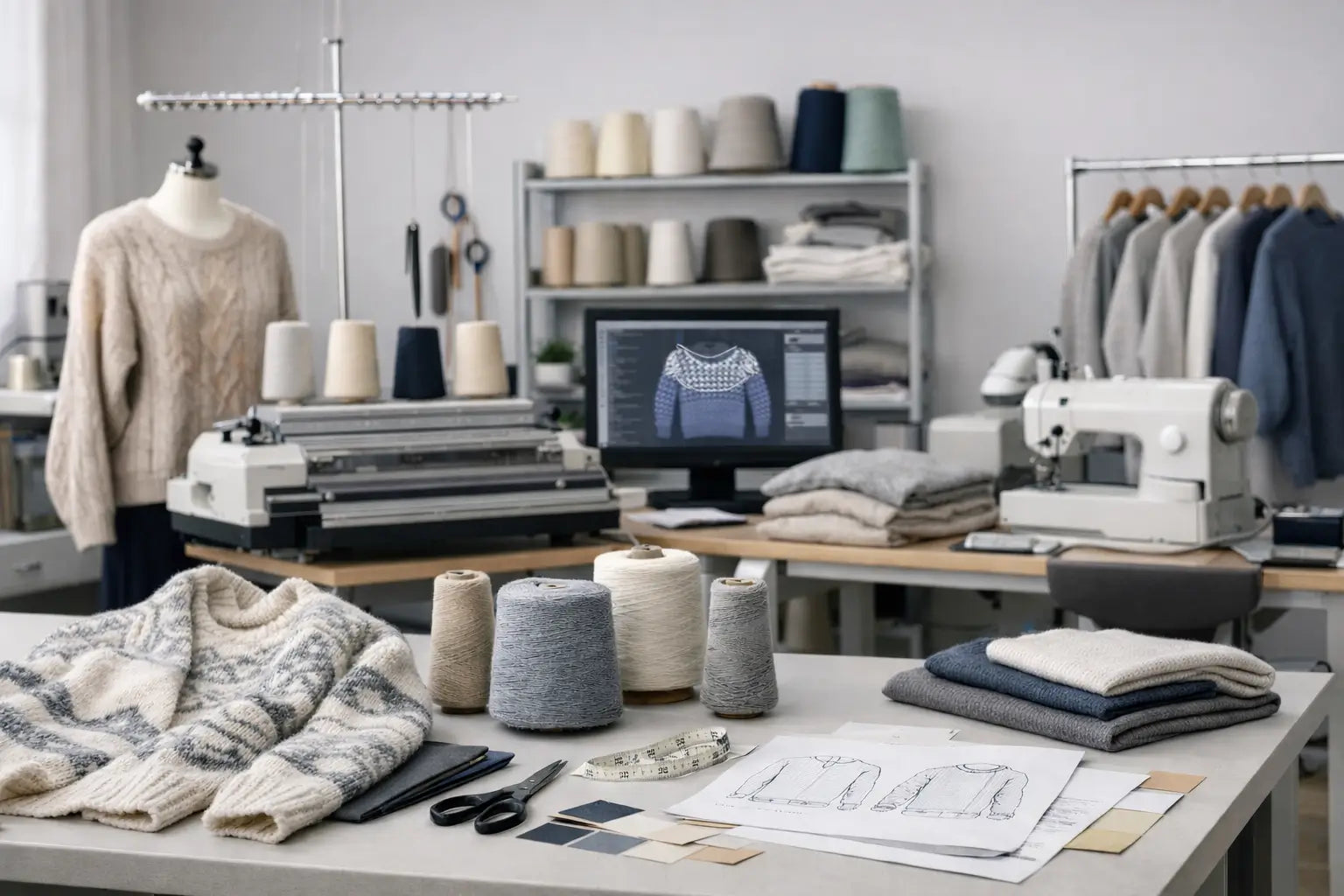
- OEM vs ODM + RFQ Checklist + MOQ & Lead Time Drivers
- What a Custom Sweater Manufacturer Typically Handles (End-to-End)
- OEM vs ODM for Custom Sweaters (Decision Guide + Comparison Table)
- How to Choose a Reliable Custom Sweater Manufacturer (Checklist + Red Flags)
- MOQ for Custom Sweaters (What It Means + What Changes It)
- RFQ & Tech Pack Checklist (Plus Copy/Paste RFQ Template)
- Lead Time: Samples vs Bulk vs Shipping (What Delays Orders)
- Materials & Yarns: How to Choose (Feel, Care, Cost Direction)
- Knit Techniques & Feasibility (Jacquard vs Intarsia vs Embroidery vs Printing)
- Quality Control: Sample Inspection Checklist + Defect Prevention
- Labels & Packaging Basics (Market-Dependent)
- Shipping & Incoterms (EXW vs FOB vs DDP)
- FAQ (8 Quick Answers)
- Summary + Next Steps (How to Get a Quote Faster)
If you’re sourcing a custom sweater under your brand, the fastest way to avoid delays is to (1) choose the right development model (OEM vs ODM), and (2) send quote-ready information the first time. This guide explains the workflow, what drives MOQ and lead time, and exactly what to prepare so your sampling and bulk production can move smoothly.
OEM vs ODM + RFQ Checklist + MOQ & Lead Time Drivers
OEM vs ODM is mostly a choice between control (OEM) and speed to start (ODM), and both options work best when your RFQ inputs are clear and complete.
| Topic | OEM (Manufacturing) | ODM (Development + Manufacturing) |
|---|---|---|
| Best when | You have clear design/specs (or can define them) | You want to start from a supplier’s base styles and modify |
| What you control most | Materials, measurements, construction details | Speed and simplicity (with some design constraints) |
| Typical trade-off | More prep and approvals = fewer surprises later | Faster start, but less uniqueness/control than full OEM |
RFQ quick checklist (send these to get an accurate quote faster):
- Reference images/sketches (front/back) or a physical sample reference
- Target yarn/fiber direction (e.g., wool blend, cotton, mohair) + desired handfeel
- Knit technique goals (e.g., jacquard, intarsia, embroidery, printing) if known
- Size spec (even a draft size chart) + fit notes
- Quantity estimate + size and color breakdown (as best you can)
- Branding: logo file + placement (label/hangtag/packaging needs)
- Target delivery window + destination country/region (for shipping options)
What usually drives MOQ and lead time:
- Yarn availability and minimums (especially for special fibers or custom colors)
- Colorways and pattern complexity (more colors/techniques can raise complexity)
- Number of sample revision rounds (often tied to clarity of specs and feedback speed)
- Production schedule/seasonality and finishing/packaging requirements
- Shipping mode and agreed trade terms (responsibility and timing vary)
Boundary conditions (always true in practice):
- Minimums and timelines depend on design complexity, yarn availability, colorways, and order quantities.
- Shipping time is separate from production time, and it depends on destination and shipping mode.
To make the rest of this guide easier to use, start by understanding what the manufacturer typically handles from inquiry to delivery.
What a Custom Sweater Manufacturer Typically Handles (End-to-End)
A custom sweater manufacturer typically supports a sequence from quote readiness → sampling → approvals → bulk production → inspection → packing → shipping, with responsibilities depending on what you outsource versus what you manage in-house.

Typical end-to-end flow:
- Review your RFQ inputs and confirm feasibility (technique, yarn, sizing, branding)
- Align on sample plan (what will be confirmed on sample vs decided upfront)
- Develop and ship sample(s) for approval and revisions
- Move to bulk production after approval (often with a pre-production confirmation step)
- Perform inspection/QC checkpoints and pack to the agreed standard
- Arrange shipping based on the agreed terms (you/your forwarder vs supplier-managed)
XTCLOTHES describes sampling and logistics support as part of its one-stop service, including sample development and shipping via common express carriers. (xtclothes.com)
Boundary conditions:
- “One-stop” can mean different responsibility splits—always confirm who does what (especially for shipping and import duties).
- Feasibility and timelines depend heavily on yarn sourcing and technique complexity.
If you’re deciding how to start—fully custom from your specs or from existing development—this OEM vs ODM breakdown will help.
OEM vs ODM for Custom Sweaters (Decision Guide + Comparison Table)
OEM and ODM are both common in knitwear sourcing, but the best choice depends on how complete your specs are and how unique you want the final product to be.
OEM vs ODM Mini-Table + “Choose If…” Checklist
| Decision factor | OEM is a better fit if… | ODM is a better fit if… |
|---|---|---|
| Your inputs today | You have a tech pack, clear measurements, or can define specs | You have inspiration and want supplier help starting from base styles |
| Differentiation needs | You need a unique look/fit/construction | You’re okay with a faster start and some design constraints |
| Timeline risk | You can budget time for approvals/revisions | You want fewer early decisions and quicker first sampling direction |
| Control level | You want tight control over yarn, construction, and specs | You want guided development with fewer unknowns at the start |
Choose OEM if:
- You can provide (or quickly build) a clear size chart/measurements and design details
- Your brand needs a distinctive knit pattern, silhouette, or construction
- You want full control over materials, trims, and finishing choices
Choose ODM if:
- You’re new and want to start from supplier-developed bases and modify
- You need to move quickly and reduce early development complexity
- You’re okay trading some uniqueness for speed and simplicity
Boundary conditions:
- Either route can take longer if the design is complex, the yarn is hard to source, or approvals are slow.
- Your supplier’s ODM offering depends on what base styles and development support they actually provide.
Once you know which model fits you, the next step is evaluating whether a supplier can execute your product reliably.
How to Choose a Reliable Custom Sweater Manufacturer (Checklist + Red Flags)
A reliable custom sweater manufacturer is the one that can explain the process clearly, confirm feasibility early, and help you avoid preventable revisions and defects.
Supplier evaluation checklist (buyer-friendly):
- Can they explain the sampling and revision workflow in plain steps?
- Do they ask clarifying questions about yarn, gauge/technique, measurements, and branding?
- Can they describe QC checkpoints and what is inspected on samples vs bulk?
- Are their MOQ and lead time statements scoped to style/yarn/complexity (not “one number for everything”)?
- Can they show relevant technique capability (e.g., jacquard/intarsia/embroidery/printing) with examples?
- Do they clarify what’s included in packing, labeling, and logistics support?
- Do they communicate quickly and document decisions (so specs don’t drift)?
- If they mention audits/certifications, can they explain scope and recency (not treated as a blanket guarantee)?
Common red flags:
- “No MOQ” or “fixed lead time” claims with no scoping to design/yarn/colorways
- Vague answers on how fit, measurement tolerances, and sample approvals are handled
- No clarity on who owns shipping, customs clearance, and duties under the chosen trade term
- Over-promising on complex techniques without confirming feasibility on sample
Boundary conditions:
- Startups can evaluate with fewer documents, but they still need a structured RFQ to avoid misunderstandings.
- “Audited” does not automatically mean “fits your requirements”—always confirm details.
If you want fewer surprises, the next thing to understand is how minimum order quantities are determined for knitwear.
MOQ for Custom Sweaters (What It Means + What Changes It)
MOQ (Minimum Order Quantity) is the minimum quantity a factory can produce for a specific style under specific conditions—often shaped by yarn sourcing, colorways, and production efficiency.
What commonly affects MOQ for sweaters:
- Yarn minimums and availability: special yarns or custom colors may require larger commitments
- Colorways: more colors can mean more yarn lots and more complexity
- Technique complexity: multi-color patterns or specialty techniques can raise the production threshold
- Production efficiency: batching similar items reduces setup and waste
- Your assortment plan: size mixing is often easier than color mixing, but confirm per style
Planning tips to reduce MOQ friction:
- Start with fewer colorways and expand once the style is proven
- Reuse a yarn across multiple styles/collections when possible
- Prioritize one hero style rather than many low-quantity styles at the start
- Provide a realistic size breakdown—this helps feasibility planning
XTCLOTHES distinguishes timelines for “custom made style” versus “available styles,” which is a useful reminder that minimums and timing are often scenario-dependent. (xtclothes.com)
Boundary conditions:
- MOQ varies by style, yarn, technique, and colorways—confirm MOQ specifically for your design.
- If you’re starting from reference photos only, MOQ and feasibility usually can’t be confirmed until key specs are aligned.
To get accurate MOQ, pricing direction, and feasibility feedback, the most important step is sending a quote-ready RFQ.
RFQ & Tech Pack Checklist (Plus Copy/Paste RFQ Template)
The fastest path to a clean quote and fewer sample revisions is a structured RFQ: it tells the factory what you want, what can be flexible, and what must match exactly.

RFQ Checklist (Minimum Viable vs Full Tech Pack)
Minimum viable RFQ (if you only have photos/sketches):
- Clear reference images (front/back/close-ups) + any must-have details
- Target material direction + handfeel goal (soft/warm/lightweight, etc.)
- Basic measurements you care about most (chest, length, sleeve, hem) + fit notes
- Colorways + approximate size breakdown
- Logo/branding placement (if any) and label/packaging needs
- Target quantity and target delivery window
Full tech pack RFQ (best for accurate quoting):
- Technical flats (front/back) + construction notes
- Size chart and points of measure (POM) + tolerance expectations
- Bill of materials (BOM): yarn/fiber, trims, labels, packaging specs
- Artwork files for logos/patterns (vector when possible)
- Knit technique notes (jacquard/intarsia/embroidery/printing), gauge target if known
- Quantity by size/color + target ship/arrival date + destination
Boundary conditions:
- If you start from photos, some details must be confirmed during sampling (fit, yarn match, stitch feel, and technique outcomes).
- Feasibility depends on yarn availability, technique complexity, and packaging requirements.
To make this truly easy, here’s a ready-to-send RFQ message you can copy and paste.
Copy/Paste RFQ Template (One Message to Start Sampling)
Please quote a custom sweater project with the details below:
1) Style name / reference:
- Reference images / links:
- Similar sample reference (if any):
2) Design & construction:
- Sweater type (pullover/cardigan/vest/etc.):
- Knit technique target (if known): (jacquard / intarsia / embroidery / printing / other)
- Key must-match details (collar, cuffs, hem, pattern placement):
3) Materials:
- Fiber/yarn preference (if known):
- Handfeel goal (soft / warm / lightweight / no-itch / easy-care):
- Colorways (Pantone or reference):
4) Sizing:
- Size range (e.g., XS–XL):
- Size chart or key measurements (chest/length/sleeve/hem):
- Fit notes (oversized/regular/slim):
5) Quantity:
- Total quantity estimate:
- Size breakdown:
- Color breakdown:
6) Branding & packaging:
- Logo file + placement:
- Labels (main label / care label / hangtag):
- Packaging requirements (polybags/cartons/barcodes):
7) Delivery:
- Target delivery window:
- Destination country/city:
- Preferred shipping mode (if any):
Questions:
- Please advise feasibility and the best technique for the design.
- Please advise MOQ options and typical sampling steps for this project.
If you’re not sure what to put in a tech pack, the sampling workflow below shows what gets confirmed and when.
Sampling Workflow Step List (RFQ → Feasibility → Sample → Revisions → Approval)
- RFQ review & feasibility check: confirm technique, yarn direction, key measurements, branding needs
- Sampling plan: decide what is fixed now vs what will be refined on sample
- Sample development: knit, assemble, finish, and document the sample
- Buyer review: fit/handfeel/measurements/pattern accuracy feedback
- Revisions (if needed): update specs and repeat critical checks
- Final approval: lock materials, measurements, and technique outcomes before bulk
- Bulk readiness: confirm packaging, labeling, and shipping responsibilities
XTCLOTHES describes sample development after confirming sweater details and then sharing photos for confirmation before shipping the sample. (xtclothes.com)
Boundary conditions:
- The number of revision rounds depends on design complexity and how fast feedback is provided.
- Bulk quality is easiest to control when approvals are documented (measurements, yarn, and technique outcomes).
If you want a faster, more accurate quote, send your RFQ using the template above (even if it’s “minimum viable”). A clear size chart + color/size breakdown usually reduces back-and-forth and speeds up feasibility confirmation.
Once the RFQ is clear, lead time becomes much easier to predict—especially when you separate production time from shipping time.
Lead Time: Samples vs Bulk vs Shipping (What Delays Orders)
Lead time is really three separate clocks: sample development, bulk production, and shipping/transit—and each is influenced by different factors.
As stated by XTCLOTHES (example timelines are scenario-based):
- For custom made style: sample lead time and production lead time are listed on the FAQ. (xtclothes.com)
- For available styles: sample lead time and bulk lead time are also listed separately. (xtclothes.com)
- Shipping/transit options and example transit durations are listed on the logistics page (express/air/sea). (xtclothes.com)
What most often delays sampling:
- Yarn selection not finalized (or yarn needs to be sourced)
- Measurements/fit goals unclear, causing multiple fit revisions
- Technique feasibility changes after the first sample (common with complex artwork)
What most often delays bulk production:
- Late changes after sample approval (materials, measurements, branding)
- Too many colorways or complex patterns added late
- Peak season scheduling constraints
- Packaging and labeling not confirmed early enough
How buyers reduce lead time risk:
- Confirm yarn direction early (and accept close alternatives when needed)
- Approve with documentation: measurement tolerances, key photos, and construction notes
- Limit last-minute changes after approval
- Share a target ship date and destination so shipping can be planned realistically
Boundary conditions:
- Production timelines depend on design complexity, yarn availability, order quantities, and factory schedule.
- Shipping time depends on destination and mode; make sure your contract clarifies what “tax included” means under your chosen terms. (xtclothes.com)
If you’re still choosing yarns and want to avoid “looks good on paper but feels wrong in hand,” this quick material guide will help.
Materials & Yarns: How to Choose (Feel, Care, Cost Direction)
For custom sweaters, yarn choice affects handfeel, warmth, care behavior, and cost direction more than almost anything else.
Choose a yarn direction by product goal:
- Warm + classic: wool or wool blends (warmth, structure; may require anti-itch or blend choices)
- Soft + premium feel: cashmere blends or fine-gauge soft fibers (higher cost direction; manage pilling expectations)
- Breathable + casual: cotton or cotton blends (comfortable; different drape and weight behavior than wool)
- Easy-care priority: blends designed for lower maintenance (confirm care expectations and testing approach)
- Statement textures: mohair-like, bouclé-like, or specialty yarns (strong look; sourcing constraints can increase variability)
Practical trade-offs to understand:
- Softer handfeel often increases pilling sensitivity unless construction and finishing are aligned
- Lighter weight may change drape and transparency, affecting pattern visibility
- Specialty yarns can introduce longer sourcing lead times or higher minimums
Boundary conditions:
- Yarn availability depends on season and supplier stock; confirm options early.
- If you need certified “sustainable” yarns, verify documentation requirements before finalizing the BOM.
Once yarn direction is set, you’ll usually need to choose the right technique to achieve logos, patterns, and durability goals.
Knit Techniques & Feasibility (Jacquard vs Intarsia vs Embroidery vs Printing)
Technique choice determines whether a design looks premium in knitwear, how durable it is, and how complex it is to produce.

XTCLOTHES lists technique capabilities such as jacquard, printing, crochet, intarsia, and tie-dye on its factory page. (xtclothes.com)
Technique Chooser Mini-Table (When to Use Which)
| Technique | Best for | Look/handfeel | Complexity notes |
|---|---|---|---|
| Jacquard | Repeating patterns, multi-color motifs | Pattern integrated into knit; can add thickness | Complexity rises with color count and pattern density |
| Intarsia | Large, clean color blocks or motifs | Distinct motif areas; often a premium look | More labor and planning for large motifs and many colors |
| Embroidery | Small logos, chest marks, patches | Added texture on top of knit | Placement and knit stability matter; can affect stretch |
| Printing on knit | Simple visuals or effects on flatter knits | Surface effect; depends on knit texture | Durability and sharpness depend on knit surface and use case |
Common “harder-to-make” design factors:
- Very high color count or very large placement motifs
- Very fine gauge with complex artwork
- Heavy textures combined with complex patterns
- Tight tolerance requirements without a clear measurement plan
Boundary conditions:
- Final feasibility depends on gauge, yarn type, and artwork constraints—confirm on sample.
- Printing feasibility depends on knit texture and durability expectations; knitted-in options may be better for premium positioning.
After technique decisions, quality control becomes much easier—especially when you know what to check on the sample before approving bulk.
Quality Control: Sample Inspection Checklist + Defect Prevention
The most effective QC is buyer-friendly: inspect the sample like a customer would, document the approvals, and align on what counts as acceptable variation before bulk.

Sample Inspection Checklist + Defect Table (What to Look For)
Sample inspection checklist (use before approving bulk):
- Measurements: key POMs match your size chart (and you’ve agreed tolerances)
- Symmetry and shape: shoulders, sleeves, hemline, neckline evenness
- Stitch consistency: no obvious tension changes, ladders, or irregularities
- Seams/linking: clean linking, no gaps, no bulky joins (where applicable)
- Handfeel and drape: matches the intended product positioning
- Pattern and logo accuracy: placement, scale, color, and alignment are correct
- Finishing: loose ends, trimming, labels placement, packaging expectations
- Wash behavior plan: agree how shrinkage/pilling will be evaluated for your market
| Issue buyers complain about | Often related to | What to do early |
|---|---|---|
| Pilling | fiber choice + construction + abrasion conditions | align yarn direction and test expectations; inspect surface after handling |
| Shrinkage / shape change | yarn + knit structure + washing/drying behavior | agree a wash/test approach and document care expectations |
| Twist / distortion | tension, construction, finishing | check symmetry and measurements; confirm construction notes |
| Holes / weak points | yarn quality, finishing, stress points | inspect high-stress areas and finishing quality |
If you reference test methods, use official standard names and agree on the method in writing (for example, ISO 6330 describes domestic washing and drying procedures used in textile testing). (iso.org)
Boundary conditions:
- “Pass/fail” expectations depend on market and positioning; agree the method and acceptance criteria before bulk.
- Document approvals (photos + measurements + notes) to reduce bulk disputes.
Once product quality is aligned, the last “surprise zone” for many brands is labeling and packaging requirements—especially when selling internationally.
Labels & Packaging Basics (Market-Dependent)
Labels and packaging make your sweater retail-ready, but the exact requirements depend on where you sell. Use official sources as a baseline and confirm details for your destination market.
Common packaging components (plan early):
- Main label + care label (placement and durability)
- Hangtag (branding and barcode needs)
- Polybag and carton requirements (protection and logistics efficiency)
US basics (high-level):
- The FTC’s Textile Fiber Rule summarizes required label disclosures such as fiber content, the manufacturer/marketer identity, and country of origin for covered products. (ftc.gov)
EU basics (high-level):
- Regulation (EU) No 1007/2011 sets rules on textile fibre names and labelling/marking of fibre composition for textile products. (eur-lex.europa.eu)
Boundary conditions:
- This is not legal advice; requirements can vary by country and product details.
- If you sell in multiple markets, confirm label content and language requirements per destination.
If you’re importing, shipping terms and responsibilities matter as much as transit time—especially when duties and taxes are involved.
Shipping & Incoterms (EXW vs FOB vs DDP)
Shipping terms define who does what (booking, export/import clearance, duties, and risk transfer). Understanding the basics reduces costly misunderstandings.

The Incoterms® rules are published and maintained by the International Chamber of Commerce (ICC), and they are the reference point used in global trade contracts. (iccwbo.org)
The U.S. trade.gov Incoterms guidance also emphasizes using Incoterms® 2020 in sales contracts. (trade.gov)
Incoterms Responsibility Mini-Table + First-Order Checklist
| Term | Who handles main transport? | Who clears export? | Who clears import & pays duties/taxes? | Typical buyer fit |
|---|---|---|---|---|
| EXW | Buyer / buyer’s forwarder | Usually buyer (confirm) | Buyer | Experienced importers with strong forwarder support |
| FOB | Buyer (from port onward) | Seller (to port/loading) | Buyer | Common for buyers managing freight but wanting seller to handle export side |
| DDP | Seller-arranged (end-to-end) | Seller | Seller (confirm scope in writing) | New importers who want simpler “delivered” pricing (must confirm details) |
First-order checklist (avoid surprises):
- Always specify the named place/port in your contract term
- Confirm whether “tax included” means duties/taxes are actually paid on your behalf (and what it includes/excludes)
- Confirm what documents are provided and who is responsible for customs clearance
- Align shipping mode with your timeline (express vs air vs sea), destination, and budget
XTCLOTHES lists example transit times for express, air freight, and sea freight and mentions “all taxes included” for some freight-forwarder options; treat this as term- and scope-dependent and confirm details in writing. (xtclothes.com)
Boundary conditions:
- Incoterms are not a full contract; responsibilities can still vary by agreement wording.
- Duties, taxes, and clearance requirements vary by destination.
To wrap up, here are the most common questions buyers ask before they start sampling.
FAQ (8 Quick Answers)
-
Q: What’s the difference between OEM and ODM for custom sweaters?
A: OEM means you provide the design/specs and the factory manufactures; ODM means the factory helps develop from base styles and you adapt/brand. The best choice depends on how complete your specs are and how unique you need the final product to be. -
Q: Which is better for my brand—OEM or ODM?
A: OEM is usually better if you need more control and uniqueness; ODM can be better if you want a faster start from existing development. Either route works best when you define what must match exactly (fit, yarn feel, branding) before bulk. -
Q: Do I need a tech pack to make a custom sweater?
A: No—but it helps a lot. If you don’t have a full tech pack, start with clear references, key measurements, yarn direction, and quantity breakdown, then confirm the missing details during sampling. -
Q: What should I include in an RFQ/tech pack to get an accurate quote for a custom sweater?
A: Your quote will be more accurate when you include references/flats, size chart (POM), material direction, technique goals, and quantity by size/color. If you only have photos, include the “must-match” details and the measurements you care about most. -
Q: What does MOQ mean for custom sweaters, and why does it vary?
A: MOQ is the minimum quantity a factory can produce for a specific style under specific conditions. It varies due to yarn sourcing, colorways, technique complexity, and production efficiency—so MOQ should be confirmed per design. -
Q: How long does it take to develop a sweater sample (and what slows it down)?
A: Sample timing depends on yarn selection, technique complexity, and how quickly approvals and revisions happen. The most common delays come from unclear measurements/fit notes and late changes to yarn or pattern details. (xtclothes.com) -
Q: What should I inspect on a sweater sample before approving bulk?
A: Check measurements, stitch consistency, seams/linking, pattern/logo accuracy, and finishing—and document your approval criteria. Agree upfront how wash behavior (shrinkage/pilling) will be evaluated for your target market. (iso.org) -
Q: What are common shipping terms for importing sweaters (EXW vs FOB vs DDP)?
A: EXW shifts most logistics responsibility to the buyer, FOB splits responsibilities at the port, and DDP is often presented as “delivered with duties paid” but must be confirmed in writing. Always include the named place/port and clarify duty/tax scope. (iccwbo.org)
If you use the RFQ template and approve samples with documented measurements and technique outcomes, you’ll reduce most of the preventable sourcing risk.
Summary + Next Steps (How to Get a Quote Faster)
Key takeaways:
- OEM vs ODM is a speed-vs-control decision—choose based on your specs and differentiation needs.
- MOQ and lead time are driven by yarn, colorways, technique complexity, and revision loops.
- A structured RFQ reduces back-and-forth and makes quoting more accurate.
- Separate sample time, bulk production time, and shipping time when planning timelines.
- Approving samples with documented measurements and expectations prevents bulk disputes.
Practical next steps (choose what matches your situation):
- If you have a full tech pack: send it with your size/color breakdown and target delivery window.
- If you only have photos/sketches: send a minimum viable RFQ + key measurements you care about most, then confirm the rest on sample.
- If you’re importing for the first time: decide your Incoterms preference early and clarify the named place/port and duty/tax scope in writing.
If you’d like a quote-ready feasibility check, send your references (or tech pack), target quantities by size/color, your destination, and your target delivery window. We’ll confirm the best development route (OEM vs ODM), technique options, and what needs to be locked on the sample before bulk.
:%20MOQ,%20Samples,%20Lead%20Time,%20and%20RFQ%20Checklist)