
Jacquard vs. Intarsia Knitwear: Which Colorwork Technique Fits Your Brand?
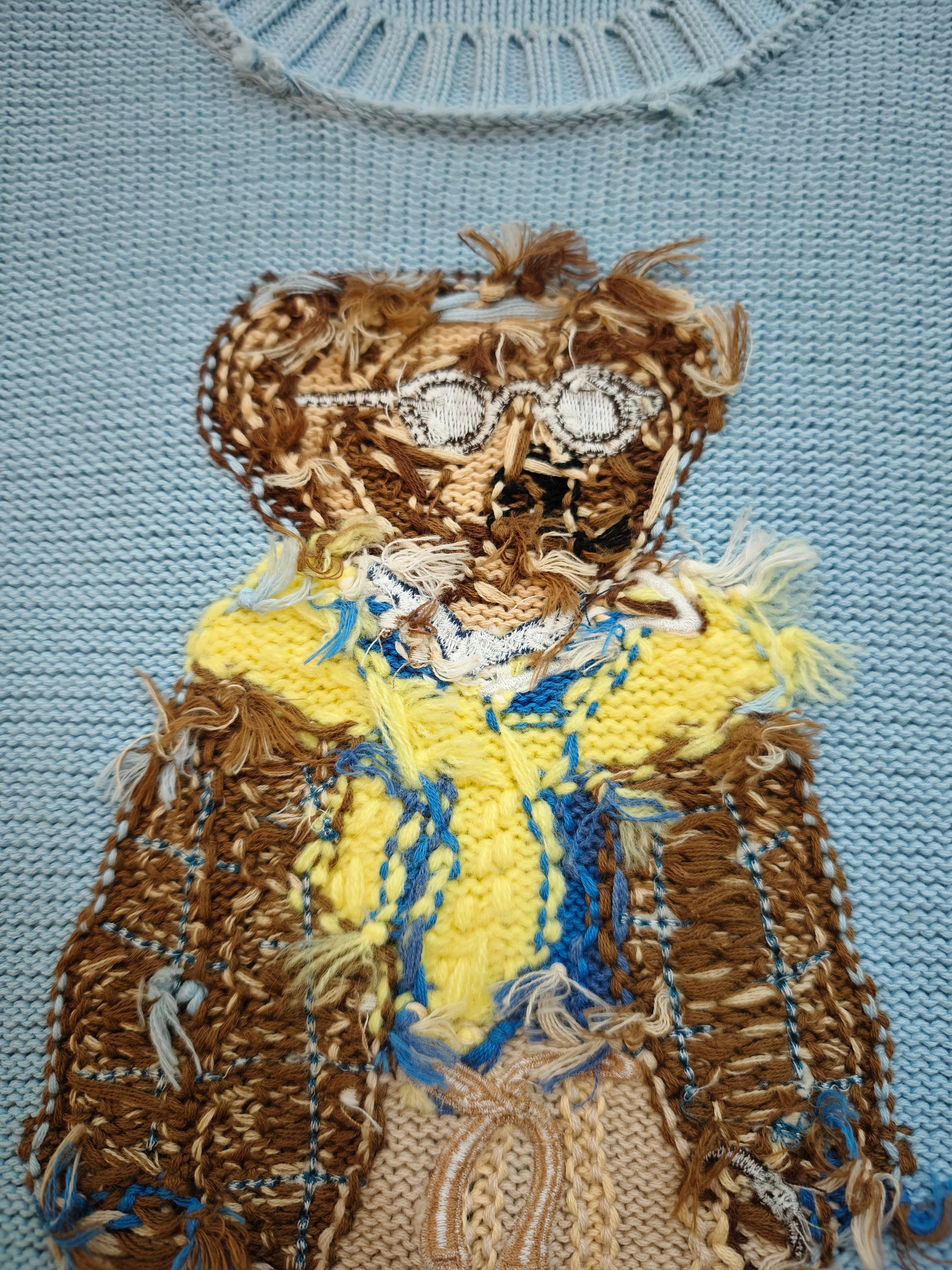
Jacquard vs. Intarsia Knitwear: Which Colorwork Technique Fits Your Brand?
If your brand leans toward bold graphics, color-blocking, or intricate patterns, you've probably come across two terms: Jacquard and Intarsia. Both are knitwear techniques for working multiple colors into a single piece — but they function very differently, and choosing the wrong one can affect how your design looks, how long it takes to produce, and what the finished garment feels like.
Here's how to tell them apart, and what to expect from your sweater manufacturer when you specify one over the other.
What Is Jacquard?
Jacquard knitting uses a fully automatic process: the knitting machine selects which color to stitch at each position, switching between colors seamlessly without any manual intervention. The entire pattern is produced in one continuous pass on the machine.
In plain English: The machine does everything. It knits Color A where needed, switches to Color B, then to Color C, all on its own. The operator sets up the program and the machine executes it.
Best for: All-over patterns, repeating motifs, fair isle designs, geometrics, and any pattern that covers most or all of the sweater body.
What Is Intarsia?
Intarsia knitting is semi-automatic. The machine knits each color block separately, but when the knitting reaches a point where the color needs to change, the operator must manually reposition the needles — skipping needles to create the boundary between color zones. This is not a fully automated switch; it requires hands-on intervention by a skilled worker during the knitting process.
Once the machine has finished knitting all the blocks, the yarn ends at each color boundary are tied off by hand on the reverse side.
In plain English: The machine knits the blocks. The operator manually handles the needle switch at every color boundary during production. Then someone hand-ties every junction point on the back to secure the yarn ends.
Best for: Large isolated graphics, logos, bold color-block designs, and situations where you want distinct color areas without carrying yarn across the back.
Side-by-Side Comparison
| Jacquard | Intarsia | |
|---|---|---|
| Automation | Fully automatic — machine handles everything | Semi-automatic — operator manually repositions needles at each color switch |
| Color limit | Up to 6 colors per design | No strict limit, but more colors = more separate yarn feeds and more manual work |
| Fabric weight | Heavier due to multi-layer construction | Lighter, single-layer feel |
| Back side | Smooth and clean — fully machine-finished | Shows tied yarn knots at each color boundary |
| Production speed | Faster — no manual steps during knitting | Slower — manual needle repositioning during knitting, plus hand-finishing after |
| Best pattern type | All-over, repeating, geometric | Large graphics, logos, color blocks |
When to Choose Jacquard
Choose Jacquard when:
- Your pattern covers most of the sweater — think Nordic motifs, fair isle bands, geometric grids
- You want a faster production cycle with no manual labor during knitting
- A slightly heavier, denser fabric works for your style
- You're working within 6 colors or fewer
- You want the inside of the garment to look clean without any visible knots or loose threads
Example: A brand launching an FW collection featuring repeating geometric patterns across the entire garment. Jacquard handles this efficiently, delivers a polished interior, and keeps lead times manageable.
When to Choose Intarsia
Choose Intarsia when:
- Your design centers on a large, standalone graphic or logo placed on a specific area of the garment
- You want clean color blocking with sharp edges between zones
- You accept that the back will show tied yarn ends at each color junction
- You're comfortable with a longer timeline — the manual needle work and hand-finishing take time
- You prefer a lighter-weight, single-layer fabric
Example: A streetwear brand wants their logo knitted as a large chest graphic in two contrasting colors, with the rest of the sweater kept solid. Intarsia isolates the graphic exactly where you want it — though the reverse side will have visible knots at each color transition.
Practical Limits You Should Know
Jacquard has a color ceiling. Most knitting machines used for sweater production handle up to 6 colors in a single design. If your artwork requires more than six shades, you'll either need to simplify it, split it across techniques, or accept compromises in the final output.
Intarsia scales with complexity. Each new color zone means more yarn feeds, more manual needle repositioning during knitting, and more hand-tied knots on the back. A design with three clean color blocks is straightforward. One with twelve scattered color patches is a different story entirely — and your sweater manufacturer will flag this before production starts.
Neither technique is "better." They solve different problems. Jacquard excels at pattern coverage and speed. Intarsia excels at clean, lightweight color placement. Pick the one that matches what your design actually demands.
Summary
Choose based on your actual design needs:
- All-over pattern, fast turnaround, clean interior → Jacquard
- Isolated graphic or logo, lightweight, color-block look → Intarsia
Both are proven techniques that deliver professional results when matched to the right project. Knowing the difference before you finalize your tech pack saves time, prevents surprises, and helps your factory deliver exactly what you envisioned.
Working on a colorwork knitwear design? Contact XT Knitwear — we'll help you choose the right technique.
- Posted in Custom Knitwear, Intarsia Knitting, Jacquard Knitwear, Knitwear Colorwork, Knitwear Production, Knitwear Techniques, sweater manufacturer
