
Crochet Sweater Scarf (Scarf with Sleeves): Product Guide + OEM/ODM Spec Checklist
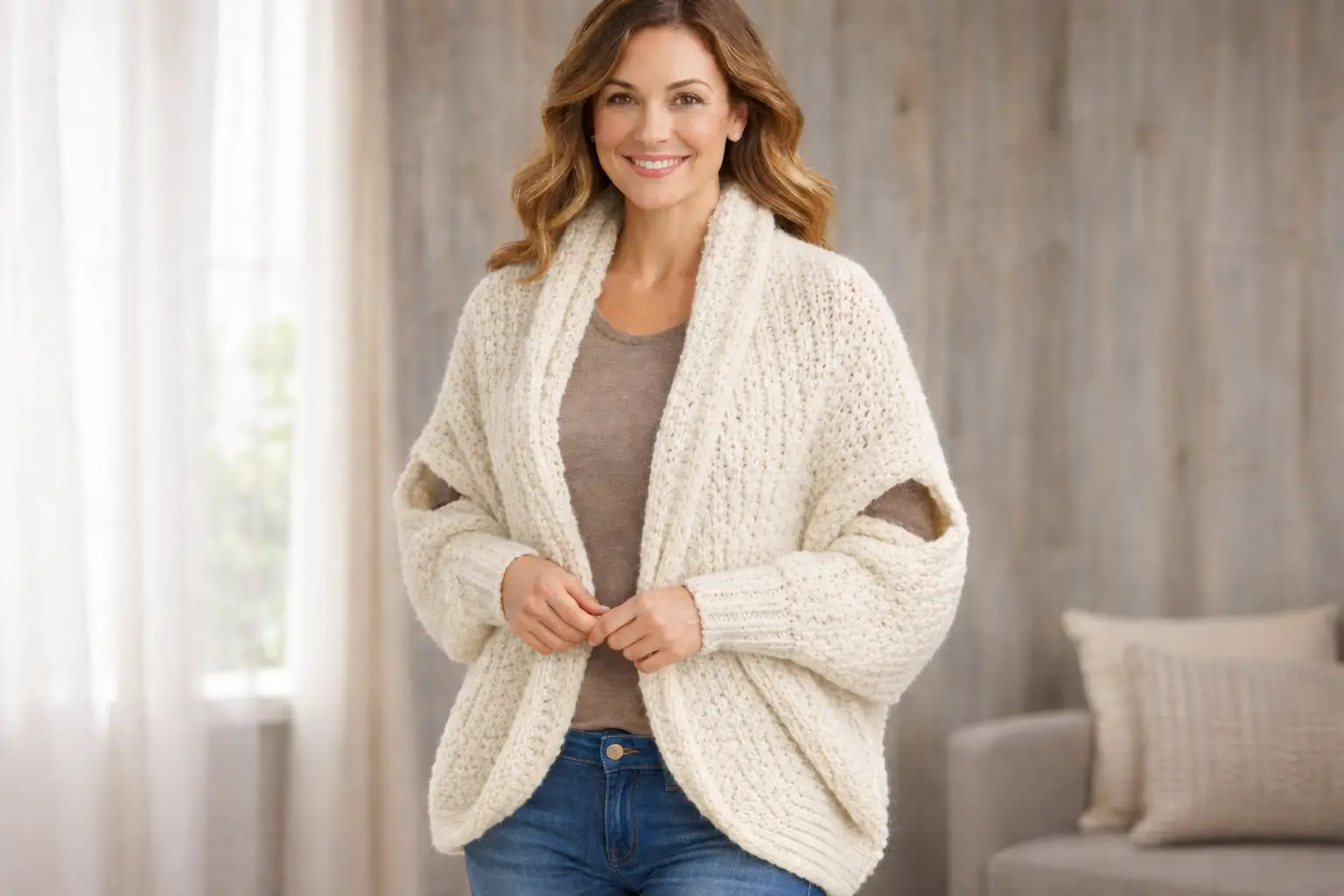
What Is a Crochet Sweater Scarf (Scarf with Sleeves)?
A crochet sweater scarf (also called a scarf with sleeves) is a long scarf-shaped wrap with built-in arm openings or short sleeves, so it can be worn like a scarf, shawl, or light cardigan-style wrap. Many styles are simple shapes with sleeve seams and are designed to be worn multiple ways.
Quick Differences (Sweater Scarf vs Shawl vs Shrug vs Wrap)
- Sweater scarf / scarf with sleeves: scarf-like length + arm openings, wearable as wrap or scarf.
- Shawl: typically a wrap with no sleeves; drapes over shoulders.
- Wrap: a broad term for shoulder coverage (may include shawls and poncho-like pieces).
- Shrug: more like a short open cardigan; often sits higher on the shoulders.
- Cardigan wrap: usually knitwear styling language for a wrap that wears “sweater-like.”
Default Wearing Method (5–7 Steps)
- Slide each arm into the sleeve openings.
- Center the wrap across your upper back.
- Let the ends fall evenly at the front.
- Adjust the neckline depth (higher for warmth, lower for drape).
- Smooth the shoulders so the sleeves hang comfortably.
- Optional: belt or pin for a more “cardigan” look.
- Optional: wear it as a normal scarf by leaving sleeves unused.
Sweater Scarf vs Shawl vs Shrug vs Wrap: What’s the Difference?
For product pages and line sheets, the goal is customer clarity. These items overlap—so pick one primary name and list 1–2 synonyms.
How to merchandise it
- If the key feature is arm openings/sleeves, “scarf with sleeves” is usually the clearest descriptor.
- If the visual is more “outer layer,” “wrap” or “shrug” may work—then add “scarf with sleeves” as a synonym.
Helpful naming note
- You may see informal names like “thneed” or “sneed” used online for scarf-with-sleeves styles. Treat these as slang/synonyms, not formal category labels.
How to Wear a Scarf With Sleeves: 5–7 Easy Ways

A practical way to support shoppers (without writing a pattern tutorial) is to show “wear modes” that match common use cases.
Easy wear modes
- Wrap mode (default): arms in sleeves, wrap across back; looks closest to a light cardigan.
- Shawl mode: sleeves lightly used; drape more open across shoulders for events or indoor layering.
- Scarf mode: don’t use sleeves; style as a long scarf for everyday wear.
- Off-shoulder mode: sleeves in, drop one side lower for relaxed drape (best with softer yarns).
- Belted mode: add a belt to create a defined waist and reduce slip.
Fit tip for fewer returns
If customers complain about slipping, the usual fix is: adjust sleeve opening position, overall width, or cuff/edge structure (see the measurement section).
Measurements That Control Fit: A Buyer Spec Checklist

When you want repeatable bulk production, describe this style like a “wrap with sleeves,” not like a craft nickname. At minimum, specify the fields below.
Buyer Spec Checklist Table
| Spec item | Why it matters | Buyer notes (what to decide) |
|---|---|---|
| Overall length | Controls coverage and styling options | Long enough for wrap mode; shorter reads as shrug |
| Overall width | Controls drape and warmth | Wider = more shawl-like; narrower = more scarf-like |
| Sleeve opening position | Controls where the “sleeves” sit on the arm | Higher placement = more cardigan feel; lower = more scarf feel |
| Sleeve opening circumference | Controls ease and comfort | Decide target layering (over tee vs over sweater) |
| Sleeve/cuff height | Controls stability and return to shape | More structure improves grip and durability |
| Edge finishing (rib/roll/clean edge) | Affects stretch, curl, and premium feel | Define the look and stability you want |
| Target weight/handfeel | Affects drape and perceived warmth | Provide a reference garment if possible |
| Size range + grading approach | Determines how many SKUs you sell | Decide: one-size drapey vs graded sizes |
| Tolerances | Controls consistency and QC | Set acceptable measurement variance for bulk |
Boundary note: Exact measurements depend on your target customer and intended drape. If you don’t have targets yet, send reference photos + a fit preference (“snug sleeves, wide drape”) and refine after the first sample.
Materials, Warmth, Drape, and Care Labels
Many tutorials talk about yarn brands; for product development, translate that into fiber content + construction density + care expectations.
Materials mini-table (buyer-friendly)
| Material direction | Strengths | Watch-outs | Best for |
|---|---|---|---|
| Acrylic / acrylic blends | Soft, consistent, easy care in many cases | Can pill; handfeel varies by yarn | Volume programs, everyday wear |
| Wool / wool blends | Warm, premium perception, good recovery | Itch sensitivity; care complexity | Winter drops, elevated assortments |
| Cotton / cotton blends | Breathable, clean handfeel | Can feel heavier; less “fluffy” warmth | Spring/fall layering |
| Lightweight “halo” looks (airy blends) | Drapey, fashion layering | Snags; needs careful finishing | Trend/fashion silhouettes |
Care label reminder
Care instructions should match fiber content and finishing. Avoid marketing claims that imply special performance unless you have testing to support it. (If you sell in multiple markets, confirm label requirements for those destinations.)
Crochet vs Knit vs Crochet-Look: What Scales for Production?
First, definitions: crochet is made by forming loops with a hook; knitting typically uses needles (and can be highly mechanized).
Online, shoppers often use “crochet” to describe a look. For brands, the safe path is to decide whether you want:
- True hand crochet, or
- A crochet-look texture created through knit/lace structures.
Many craft sources state that “true crochet” isn’t mass-produced the same way knitting is, which is why “mass-produced crochet” can raise transparency and labor concerns. At the same time, technical work exists exploring automation, so avoid sweeping absolutes and verify any supplier claims.
Decision table (look vs scalability vs labeling)
| Option | Look | Scalability | Labeling / transparency guidance |
|---|---|---|---|
| Hand crochet | Most “authentic” crochet texture | Labor-heavy; higher variability | If you market it as crochet, be clear about hand-made process |
| Knit construction | Smooth to textured depending on stitch | Highly scalable | Don’t call it hand crochet; use “knit” or “textured knit” |
| Crochet-look (knit/lace) | Mimics crochet vibe visually | Scalable with repeatable structures | Use “crochet-look” / “crochet-inspired” wording where appropriate |
Risk-checklist before you claim “crochet” in listings
- Are you selling hand crochet or crochet-look? Write it plainly.
- If a supplier claims “machine crochet,” ask: process description + samples + consistency plan.
- Avoid implying hand-made labor if the product is machine-made (trust and compliance risk).
Customization Options: Colors, Texture, Labels, and Packaging
This is where brands can differentiate without rewriting the entire construction.
Customization checklist
Product & aesthetic
- Colorways (solid, heather, multi-color)
- Texture direction (clean knit vs crochet-look texture)
- Edge/cuff style (more structured vs more drapey)
- Size strategy (one-size drape vs graded sizes)
Branding trims
- Woven main label
- Care label (fiber content + care instructions)
- Hangtag
- Optional: size label, swing tag barcode placement
Packaging
- E-commerce: protective polybag + insert card (if desired)
- Retail: folding standards + hangtag placement + optional belly band/box
- Note: packaging and labeling should align with destination requirements and fiber claims.
Sampling and Quotation: What to Send (Tech Pack Checklist)
If you want an accurate quote and a smoother sampling cycle, send a “quote pack” that answers the factory’s first questions up front.
Copy-paste checklist (send this with your inquiry)
- Reference photos (front/back/side; include close-ups of texture and sleeve openings)
- Target measurements (use the spec table fields above)
- Material direction (fiber preference + target handfeel/drape)
- Color count (and any yarn-dye requirements, if applicable)
- Construction notes (crochet vs knit vs crochet-look; edge/cuff structure)
- Branding (label artwork, care label content, hangtag needs)
- Packaging (e-com or retail; folding/hanging requirements)
- Expected order quantity (by colorway/size) and target delivery window (planning only)
Typical sampling flow (no promises—depends on complexity)
- Feasibility review (construction + material direction)
- First sample
- Fit/drape feedback + revisions (often sleeve placement and cuff stability)
- Approval sample
- Bulk production planning (materials, QC points, packaging)
Common causes of sample revisions
- Sleeve opening position feels off when worn
- Drape is too stiff or too loose
- Cuffs/edges stretch out or don’t recover
- Texture looks different than reference (especially for crochet-look)
Cost, Lead Time, and Shipping Planning: What Actually Drives It
Instead of quoting numbers in a guide (which can be misleading), plan around drivers.
What drives cost (most common)
- Fiber/yarn cost and availability
- Texture complexity (more steps/finishing)
- Edge/cuff structure and durability requirements
- Packaging complexity (especially retail-ready folding)
What drives lead time
- Sampling rounds and approval speed
- Yarn sourcing (in-stock vs special order)
- Order quantity and colorway count
- Seasonality and factory schedule
Shipping planning mini-table
| Planning item | Why it matters | What to decide early |
|---|---|---|
| Packaging volume | Impacts shipping cost and carton count | Polybag vs box vs retail folding |
| Destination | Affects documents and clearance steps | Ship-to country + preferred terms |
| Delivery window | Impacts production scheduling | Marketing drop date + buffer time |
| Claims on labels | Must match actual fiber/process | Crochet vs crochet-look wording |
Reminder: MOQ, lead time, and shipping timelines vary by style, material, order quantity, and destination.
FAQ (Quick Answers)
What is a crochet sweater scarf?
A crochet sweater scarf (scarf with sleeves) is a scarf-like wrap with arm openings so it can wear like a shawl or light cardigan.
Is a scarf with sleeves the same as a shrug?
They overlap. A scarf with sleeves is scarf-shaped with arm openings; a shrug is usually a short open cardigan silhouette.
How do you wear a sweater scarf?
Most people put arms through the openings, center it across the upper back, and adjust the drape; it can also be styled like a normal scarf or shawl.
What measurements should I specify for bulk production?
At minimum: overall length/width, sleeve opening position and circumference, cuff/edge structure, size strategy, and tolerances.
What material is best for warmth vs drape?
Warmth is driven by fiber and density; drape is driven by fiber, construction, and weight. Choose based on your target season and the look you want.
Can crochet be made by machine?
Many sources say “true crochet” isn’t mass-produced the same way knitting is, while technical work exists exploring automation. For product development, specify hand crochet vs crochet-look and verify any production claims with samples.
Can I customize labels and packaging?
Yes. Brands typically specify woven labels, care labels, hangtags, and packaging requirements—aligned with fiber claims and destination needs.
What should I send to get a quote and start sampling?
Send reference photos, target measurements, material direction, colorways, branding trims, packaging needs, and expected order quantity—then refine after the first sample.
Summary: Turn Inspiration Into a Repeatable Retail SKU
If you want a “crochet sweater scarf” that sells consistently at scale:
- Define the product as scarf with sleeves (clear naming)
- Lock fit with a measurement checklist (length/width + sleeve placement)
- Choose your path: hand crochet or crochet-look—and label honestly
- Send a complete sampling pack to reduce revisions
Conversion Layer: How to start (low-friction)
- Copy/paste the Sampling & Quotation checklist section into your inquiry.
- Include your target measurements + 2–3 reference images, and ask for a feasibility review and sample plan.
- If you’re planning a seasonal drop, start sampling early—timelines depend on design, yarn availability, approvals, quantity, and destination.
:%20Product%20Guide%20+%20OEM/ODM%20Spec%20Checklist)