
Mohair Knitting Patterns: How to Choose the Right Style (and a Factory-Ready Spec Checklist)
Introduction: What “mohair knitting patterns” usually means (and how to use this guide)
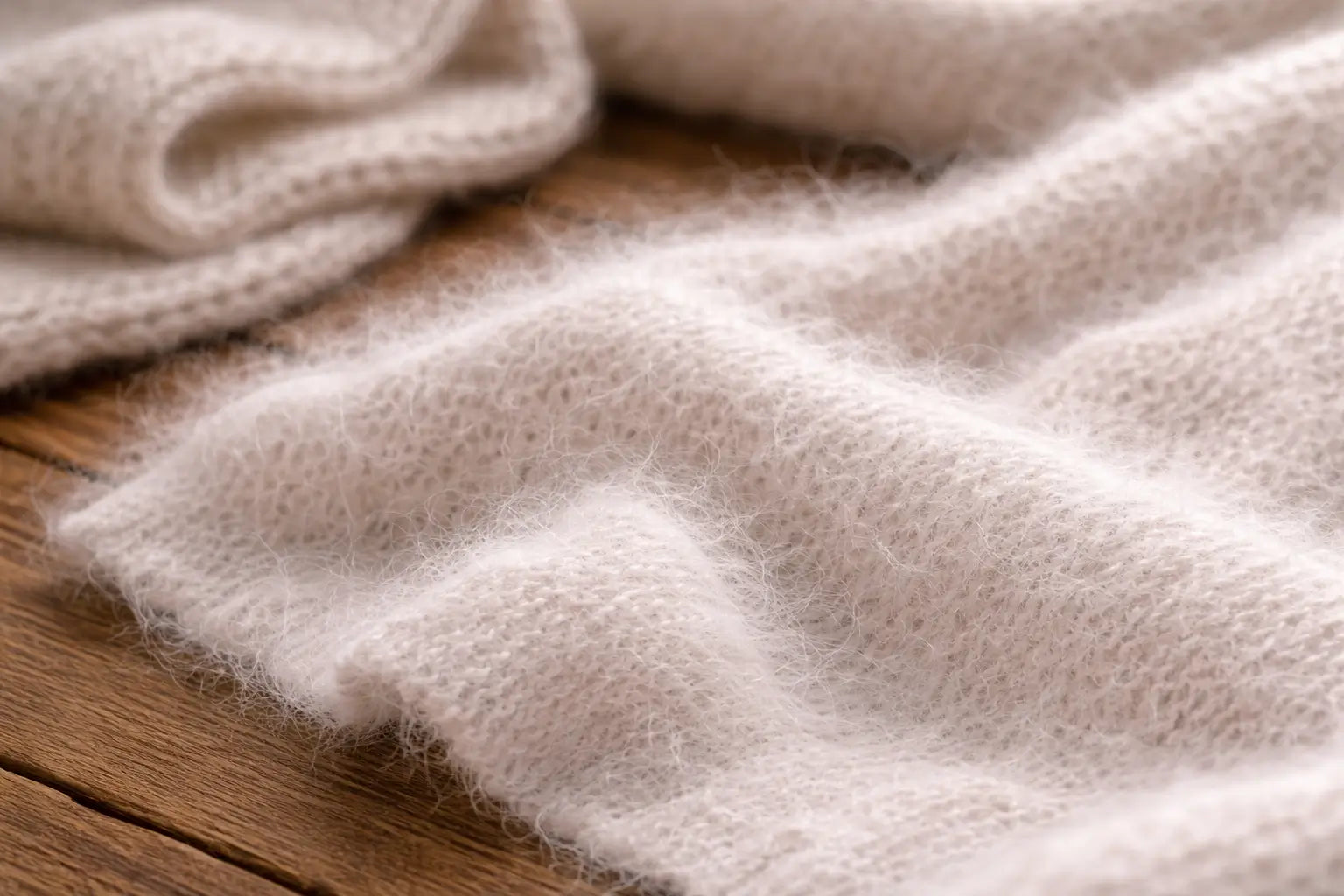
Mohair knitting patterns usually means “patterns that look good with mohair (or silk mohair),” not a special pattern format—and the biggest decisions are yarn strategy (mohair-only vs held together) and fabric goal (airy vs structured). (textileexchange.org)
Key points
- Mohair is a specialty animal fiber from angora goats, commonly used to add a soft “halo” and sheen. (textileexchange.org)
- Many modern patterns assume silk mohair held with another yarn (a “base yarn”) to add fluff while keeping structure. (thewoollythistle.com)
- This guide helps you:
- Pick mohair-friendly pattern directions (by garment type)
- Understand mohair-only vs held double
- Use gauge to control airy vs structured results
- If you’re a brand: translate inspiration into a tech pack for sampling
Boundary conditions / caveats
- Results depend on fiber blend, gauge, needle size, and finishing.
- This guide does not provide or reproduce copyrighted patterns (charts/row-by-row instructions).
Want the quickest route? Jump to the 60-second decision table below.
Pick a mohair pattern direction in 60 seconds
Pick your goal first, then choose mohair-only vs held together, then select a pattern direction that matches the fabric behavior you want.
Mini-table: goal → yarn strategy → best pattern direction
| Your goal | Mohair-only tends to work best when… | Held together (base + mohair) tends to work best when… | Start here |
|---|---|---|---|
| Airy, “cloudy,” light, slightly sheer | You want an ethereal fabric and can accept less structure | You want airy + a bit more stability | See Mohair-only vs held double + Airy vs structured |
| Soft halo and wearable structure | You’re okay with a very relaxed shape (shawls, open layers) | You want predictable fit + better stitch stability | See Held together decision rules |
| Clean stitch definition (less fuzz dominance) | You choose mohair blends carefully and avoid very open gauges | You use a smoother base yarn to support stitch clarity | See Gauge & swatching workflow |
| Brand development: make this look in production | You have a clear fabric target + measurements | You want repeatable fabric behavior and QC checkpoints | Jump to For brands: tech pack |
Key points
- “Held double / held together” = knitting with two strands treated as one (often base yarn + mohair). (interweave.com)
- Gauge controls opacity, drape, and size more than most people expect. (sheepandstitch.com)
Boundary conditions / caveats
- The same pattern can behave very differently with a different yarn plan—swatch before committing. (sheepandstitch.com)
First, choose a mohair-friendly garment direction.
Pattern types that work well with mohair (by garment)
Mohair shines in patterns where you want drape, softness, and halo—and where you don’t need crisp stitch edges to carry the design.
Key points
- Favor simple silhouettes + intentional texture (lace/mesh, stockinette, light rib) over ultra-crisp cables.
- Pick pattern directions based on where you want structure (neckline, hems, front bands) vs where you want floaty drape.

Sweaters & pullovers (lightweight vs cozy)
Mohair sweaters work best when the pattern supports your chosen fabric density—airy pullovers feel dreamy; structured pullovers need more support from yarn strategy and finishing.
Key points
- Airy mohair sweaters: prioritize simple construction, relaxed ease, and stitch patterns that look good softened by halo.
- More structured sweaters: consider held-together yarn strategy and stable edges (neckline/hem/rib).
Boundary conditions / caveats
- Airy fabric can feel “see-through” under bright light depending on gauge and color.
Considering a cardigan? Here’s what changes.
Cardigans (drape, layering, edges)
Cardigans highlight mohair’s softness, but they also stress-test front edges and button bands, where structure matters.
Key points
- Look for patterns with clear instructions for front bands/edges (or choose a design where closures are minimal).
- If you want crisp edges: a base yarn + mohair approach often behaves more predictably than mohair-only.
Boundary conditions / caveats
- Front edges can stretch over wear; finishing choices matter.
Want the simplest win? Accessories are often easiest.
Shawls & scarves (airiness, halo showcase)
Accessories are the most forgiving place to enjoy mohair’s halo—fit is flexible and airy fabric looks intentional.
Key points
- Mohair-friendly traits: open stitches, simple repeats, and patterns that look good with soft stitch definition.
- Great for exploring mohair-only looks without needing strict garment fit.
Boundary conditions / caveats
- Very open stitches can snag more easily depending on fiber blend and use case.
For layering pieces, vests can be great—if you choose structure intentionally.
Vests & lightweight layers (structure decisions)
Vests can be mohair-friendly, but many vest silhouettes need a bit more stability than mohair-only provides.
Key points
- Airy vests: best as layering pieces where softness is the point.
- Structured vests: consider held together to keep shape and reduce “collapse” at shoulders/hem.
Boundary conditions / caveats
- Armholes/necklines are common “shape risk points”—spec those carefully.
Now decide: mohair-only or held together?
Mohair-only vs held together (held double): what it means + when to choose each
You can knit mohair on its own, but many knitters hold it with a base yarn to get more structure, stability, and predictable fabric behavior. (thewoollythistle.com)
Definition: “held together” / “held double” in one paragraph
“Held double” (or “held together”) means knitting with two strands at the same time as if they were one thicker yarn—this typically changes thickness and can change gauge. (interweave.com)
Boundary conditions / caveats
- Holding two strands increases the chance of missing a strand on a stitch (you’ll see it as uneven texture later). (moderndailyknitting.com)
Decision rules: when mohair-only makes sense vs when to hold with a base yarn
Mohair-only is a strong fit when…
- You want an ethereal, web-like fabric and don’t need strong structure. (thewoollythistle.com)
- The item is forgiving on fit (shawls/scarves, airy layers).
- You’re happy with softer stitch definition.
Held together (base + mohair) is a strong fit when…
- You want halo + structure in a sweater/cardigan that must hold shape.
- You want more predictable sizing and easier repeatability across garments.
- You want to “tune” the look using the base yarn (smoother base = clearer stitches; fuzzier base = softer look).
Boundary conditions / caveats
- Switching yarn strategy can change size even in the same pattern—plan to swatch and measure. (sheepandstitch.com)
Next, decide whether you want airy/sheery or structured—and use gauge to get there.
Airy/sheery vs structured: how gauge, needles, and stitches change the result
Airy vs structured mohair is mostly a fabric density decision: gauge (plus needle size and yarn strategy) controls how sheer, drapey, and stable your knit will be.

Comparison table: airy vs structured mohair outcomes
| Lever | Airy / sheery direction | Structured direction |
|---|---|---|
| Gauge & needle approach | Larger needles / more open gauge (more drape, more transparency) | Smaller needles / denser gauge (more coverage, more stability) |
| Yarn strategy | Often mohair-only or lightly supported | Often base + mohair held together |
| Stitch choice | Lace/mesh/stockinette that looks good softened | Rib, tighter textures, stable edges |
| Fit behavior | More forgiving, can feel floaty | More predictable shaping and silhouette |
| Best use cases | Shawls, airy pullovers, light layers | Sweaters with shape, cardigans with defined edges |
Boundary conditions / caveats
- Halo softens stitch edges; if the pattern’s design depends on crisp lines, test before committing.
- Finishing and wear can change drape—swatch is your insurance policy. (sheepandstitch.com)
Ready to control outcomes? Here’s the swatching workflow that makes mohair decisions easier.
Gauge & swatching workflow for mohair (step list)
Gauge is the relationship between needle size, yarn weight, and your knitting tension—and it’s the most reliable way to predict size and fabric behavior. (sheepandstitch.com)
Key points
- A gauge swatch tells you whether your yarn + needles match the pattern’s expected gauge. (sheepandstitch.com)
- Swatching also lets you test the halo, drape, and transparency before you knit a whole garment.
Step list: swatch → measure → adjust → decide
- Choose your fabric goal (airy vs structured) and decide whether you want mohair-only or held together.
- Start with the pattern’s baseline needle size and yarn strategy (or pick a reasonable starting point if you’re adapting).
- Knit a swatch large enough to measure comfortably (not just a tiny square).
- Measure gauge in the same way the pattern expects (and note whether your fabric feels too sheer or too stiff).
- Adjust one lever at a time:
- Too loose/too sheer → try smaller needles or add a base yarn
- Too stiff/too dense → try larger needles or change the base yarn plan
- Repeat until your gauge and fabric feel match your goal.
- Record your decisions (needle size, yarn plan, resulting fabric behavior) so you can repeat it consistently.
Boundary conditions / caveats
- Different stitch patterns can change gauge; swatch in the stitch you’ll use most.
- Your gauge can shift between flat and in-the-round; check what the pattern uses.
Now that you know your yarn plan and gauge direction, let’s make sure the pattern itself has what you need.
Where to find mohair patterns + what to check before you buy/download
You’ll find mohair patterns in designer pattern stores, yarn brand libraries, marketplaces, and community recommendations—but pattern quality varies, so a quick checklist prevents expensive surprises.
Key points
- A “good mohair pattern” clearly states:
- Yarn strategy (mohair-only vs held together)
- Gauge target and needle guidance
- Sizes and how measurements are presented
- Construction method (top-down/bottom-up, seamed vs seamless)
- Required skills (lace charts, short rows, picking up stitches, etc.)
Checklist: what to check before buying/downloading
-
Materials clarity
- Does it specify yarn weight(s) and whether mohair is held with a base yarn?
- Does it give enough guidance to choose substitutes responsibly?
-
Gauge + fabric intent
- Does it state gauge clearly and hint at whether the fabric is meant to be airy or structured?
-
Sizing & grading
- Are garment measurements provided (not just “fits size X”)?
- Is ease (tight vs relaxed) explained?
-
Construction detail
- Is construction method clear (raglan, set-in sleeve, drop shoulder)?
- Are finishing/edge treatments described?
-
Difficulty signals
- Are skills listed, and are instructions readable (charts or written, and which is used)?
-
Photos / sample info
- Do photos show the fabric under normal lighting so you can judge transparency?
If you’re adapting (e.g., “fingering + mohair” → something else)
- Treat the pattern as design intent; your swatch becomes the truth.
- Plan extra time for gauge math and fit checking.
Boundary conditions / caveats
- This is not legal advice: if you plan commercial production from a pattern, consider permissions and licensing.
New to mohair? Here are the most common pain points (and how to avoid them).
Beginner tips & troubleshooting (two strands, frogging, tension)
Mohair can be beginner-friendly if you pick forgiving stitch patterns and plan for its “grabby” halo—but you’ll have fewer frustrations if you use simple handling tactics. (moderndailyknitting.com)
Key points
- Mohair’s halo can make ripping back (“frogging”) harder.
- Two strands held together can cause missed-strand stitches unless you manage tension and needle tips. (moderndailyknitting.com)
Problem → quick fix checklist
-
Problem: I keep missing one strand when knitting held together
Fix: Use pointier tips, slow down slightly, and visually check both strands are caught in each stitch. (moderndailyknitting.com) -
Problem: Frogging is a nightmare
Fix: Add lifelines early; consider a smoother base yarn plan if you expect revisions. -
Problem: Tension looks uneven
Fix: Swatch longer; mohair can “bloom” and soften unevenness, but big tension swings won’t disappear. -
Problem: It feels too scratchy or too fuzzy
Fix: Try a different fiber blend, adjust gauge, or switch to held-together with a smoother base yarn.
Boundary conditions / caveats
- Handling difficulty varies widely by blend and finishing (some mohair blends are far less “grabby” than others).
- If the project is high-stakes (gift, tight deadline), choose patterns with simpler construction and clearer instructions.
If you’re developing products—not just knitting—here’s how to translate inspiration into a factory-ready spec.
For brands: from pattern inspiration to a factory-ready tech pack
If you’re using a mohair pattern or photo as inspiration for a product line, the factory can only sample accurately if you translate “the look” into measurable specs (yarn plan, gauge target, measurements, construction, and acceptance criteria).

Key points
- “Mohair” is not a spec by itself; the spec is fiber blend + yarn plan + gauge + finishing + measurements.
- Your fastest path to a good sample is a clear tech pack and a sample checklist.
Tech pack checklist (what to include for mohair knitwear)
A) Reference + target outcome
- Reference images (front/back/close-up) and notes: “airy vs structured,” transparency expectations, halo level
B) Yarn specification (the non-negotiables)
- Fiber content target (e.g., mohair blend vs silk mohair blend)
- Yarn strategy: mohair-only vs base + mohair held together
- Color targets (and whether marl/heather effects are intended)
C) Gauge + fabric construction
- Target gauge direction (denser vs more open) and stitch type(s) (stockinette, rib, mesh, etc.)
- Key edge structures (neckline, hem, cuff, front band)
D) Measurements + size grading
- Measurement chart for each size (and which measurements are “must match”)
- Fit intent (relaxed vs fitted) and where ease is expected
E) Construction notes
- Construction type (raglan, drop shoulder, set-in sleeve, etc.)
- Seam method expectations (if applicable) and finishing details
F) Trims, labels, and packaging
- Label placement, care label requirements (market-dependent), packaging preferences
G) Sample evaluation criteria
- What matters most: silhouette, handfeel, surface consistency, edge stability, measurement tolerances, appearance in normal light
Sample request packet (how to reduce sampling iterations)
- Send your tech pack + reference images + size range + target ship window.
- Align on yarn plan early (mohair-only vs held-together) and confirm yarn availability options.
- Approve the sample using a written checklist (not “looks good”), then lock specs before bulk.
Boundary conditions / caveats
- Feasibility depends on yarn availability, complexity, and target cost positioning—confirm during sampling.
- A “pattern look” rarely translates 1:1 without decisions (especially gauge and yarn pairing).
Need a factory quote or sample for a mohair knit style?
If you’re working with an OEM/ODM knitwear manufacturer (like XTCLOTHES), sending a complete spec pack speeds up quoting and sampling. Include:
- Reference images / tech pack
- Quantity (by color), size range
- Target ship date window
- Yarn preference (mohair blend / silk mohair blend) and whether you want mohair-only or held together
- Artwork method if applicable (jacquard/intarsia/print)
(CTA note: Optional—this guide is usable even if you don’t contact anyone.)
Before bulk production, what should you check on the sample? Use the QC list below.
For brands: mohair knitwear QC checklist before bulk production
For mohair knitwear, QC should focus on measurements, surface consistency, edge stability, and finishing, with checks organized by production stage.
Key points
- Mohair surfaces can hide small knit defects but also make certain issues harder to spot—use consistent lighting and close-up inspection.
- Sample approval should be written (what’s acceptable, what’s not).
QC by stage (knitting → linking → finishing → packing)
| Stage | What to check | Why it matters |
|---|---|---|
| Knitting | Gauge consistency, fabric density, visible thin/loose areas, uniformity across panels | Prevents fit drift and patchy transparency |
| Linking / seaming | Seam strength, alignment, sleeve set symmetry, edge stability | Seams and edges drive durability and shape |
| Finishing | Handfeel consistency, surface “halo” consistency, edge recovery, overall appearance in normal light | Finishing changes drape and perceived quality |
| Packing | Measurement spot-check, label placement, packaging correctness | Reduces returns and customer dissatisfaction |
Risk checklist (sample approval focus)
- Measurements: confirm key points match the tech pack (and identify which points matter most)
- Edges: neckline/hem/cuffs/front bands hold shape as expected
- Surface: consistent appearance (no obvious thin patches, uneven halo zones)
- Construction: symmetry, clean joins, no uncomfortable seam behavior
- Appearance under light: transparency matches brand intent (airy vs “too see-through”)
Boundary conditions / caveats
- QC priorities differ by positioning (airy luxury vs everyday wearable) and by yarn blend/gauge.
- Avoid “guarantee language” (no shedding/pilling claims); focus on inspection and acceptance criteria.
What drives cost and timeline for mohair knitwear production? Here are the decision levers.
For brands: what drives cost & timeline (without numbers)
Mohair knitwear cost and timeline are driven by yarn plan, fabric density, complexity, finishing requirements, and number of sample iterations.
Key points
- Yarn availability & pairing plan: base + mohair combinations may require sourcing alignment.
- Gauge density: denser fabrics generally use more yarn and time; airy fabrics can need extra care to keep uniformity.
- Complexity: colorwork, special trims, or intricate construction increases steps and risk.
- Finishing & QC standard: higher consistency targets require more inspection and process control.
- Sampling iterations: unclear specs = more revisions.
Boundary conditions / caveats
- Drivers vary by style, order size, yarn sourcing, and brand requirements.
- The easiest lever to reduce iterations is a clearer tech pack and a stricter sample checklist.
Still deciding? The FAQs below answer the most common questions quickly.
FAQ
Can you knit mohair on its own?
Yes—mohair (often laceweight mohair) can be knit on its own for an airy, web-like fabric, but many patterns hold it with another yarn to add structure and predictable behavior. (thewoollythistle.com)
Boundary note: If you need crisp shape (sweaters with strong edges), held-together is often easier to control.
What does “held double” mean (and why do people do it with mohair)?
Held double means knitting with two strands together as one, which changes thickness and can affect gauge; people do it with mohair to add halo while keeping stability. (interweave.com)
Boundary note: Two strands increase handling complexity—swatch and check for missed-strand stitches. (moderndailyknitting.com)
What should you check in a mohair pattern before buying/downloading it?
Check the yarn strategy (mohair-only vs held with base yarn), gauge, sizing/measurements, construction method, and required skills—these predict whether you’ll get the look and fit you expect.
Boundary note: If the pattern is vague on gauge or sizing, expect extra swatching and adjustments.
Is mohair beginner-friendly?
It can be, if you choose simple stitches and forgiving fit—most frustration comes from frogging difficulty and two-strand handling. (moderndailyknitting.com)
Boundary note: Add lifelines early and choose patterns with clear, readable instructions.
How do you choose needle size and gauge for mohair to get an airy fabric?
Start from your goal (airy vs structured), swatch with your chosen yarn plan, then adjust needle size until the fabric matches the look you want; gauge depends on needle size, yarn weight, and your tension. (sheepandstitch.com)
Boundary note: Swatch in the main stitch pattern—lace/mesh and rib can measure differently.
Can you substitute a single thicker yarn for a “base yarn + mohair” combo?
Sometimes, but it rarely matches the same halo and softness; the substitution usually changes drape, warmth, and stitch definition even if you hit a similar gauge.
Caution table
| What you’re trying to match | What often changes with a single thicker yarn |
|---|---|
| Halo / “cloudiness” | Usually less halo than mohair |
| Stitch softness | Can feel more solid / less airy |
| Drape | Can become heavier or stiffer |
| Look under light | Transparency and texture shift |
Boundary note: Your swatch is the only reliable proof—plan to adjust.
For brands: what information does a factory need to sample a mohair sweater from an inspiration reference?
At minimum: reference images, fabric goal (airy vs structured), yarn plan (mohair-only vs held-together), gauge direction, measurement chart, construction notes, and sample acceptance criteria.
Boundary note: If you don’t know exact specs yet, document target outcomes and confirm during sampling.
Summary: next steps (DIY vs brand)
If you’re knitting, choose a garment direction (sweater/cardigan/shawl/vest), decide mohair-only vs held double, then use gauge swatching to dial in airy vs structured results. (sheepandstitch.com)
DIY next steps
- Pick pattern direction → choose yarn strategy → swatch → commit.
Brand next steps
- Translate inspiration into a tech pack (yarn plan + gauge + measurements + construction) → sample → approve with QC checklist → bulk.
Boundary conditions / caveats
- The “best” choice depends on your fabric goal, yarn blend, and how much structure you need.
)