
How to Choose the Best Pink Cardigan Sweater for Women
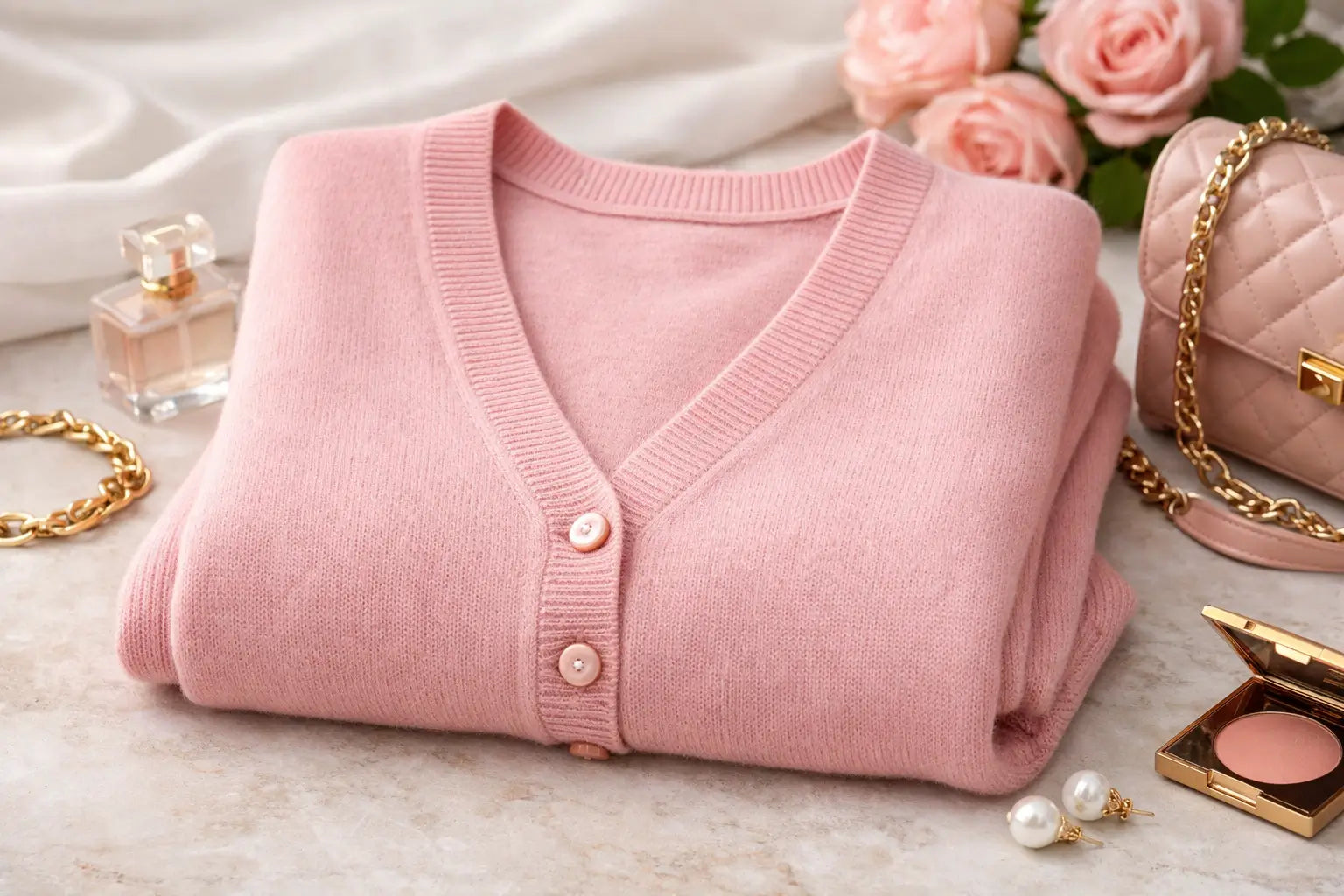
A “best” pink cardigan isn’t one magical product—it’s the one that matches your season, comfort, wardrobe, and how much care you’re willing to do. This guide gives you a simple rubric (quality + fabric + fit + care + shade), so you can shop faster and avoid the usual sweater regrets (thin knits, pilling surprises, weird fit, or a pink that looks totally different in real life).
Choose the best pink cardigan in 60 seconds
The best pink cardigan for you is the one that (1) feels right for your season, (2) has clear quality signals (not flimsy finishing), (3) fits using measurements (not just “M/L”), (4) matches your care tolerance, and (5) is a shade you’ll actually wear.
60-second “best-for-you” rubric (mini table)
| Decide this first | Quick rule of thumb | What to check on the product page |
|---|---|---|
| Fabric | Pick by climate + skin sensitivity + care tolerance | Fiber % + care label |
| Quality | Look for opacity, clean finishing, strong button band | Close-up photos + stitching + reviews |
| Fit | Choose size by garment measurements + layering intent | Bust/chest width + shoulder + sleeve + length |
| Care | Lower friction + label-first washing reduces issues (no guarantees) | Care label + “pilling/shrink” review patterns |
| Shade | Lower-saturation pinks are usually easier to style | Shade name + user photos |
If you only do 3 checks: 1) Fiber % + care label, 2) garment measurements, 3) review patterns (pilling, itchy, stretching, shrinking).
Quality signals: what makes a pink cardigan look “high quality”
A high-quality pink cardigan isn’t defined by brand name—it’s defined by what you can see and verify: knit density/opacity, clean finishing, sturdy closures, and transparent measurements.

The quick quality checklist (what to check first) + photo-based red flags
Use this ranked checklist when comparing options:
- Fiber % is clearly listed (not vague “soft blend”).
- Garment measurements are provided (not just “model is 5'9 wearing S”).
- Opacity looks intentional (you can’t easily see pocket lining/skin through it unless it’s meant to be sheer).
- Button band/placket looks structured (doesn’t curl, ripple, or look wavy in photos).
- Seams and edges look clean (no obvious loose threads; hems lie flat).
- Ribbing looks “snappy,” not tired (cuffs and hem hold shape in photos).
- Buttons/closures look secure (even spacing, no pulling between buttons).
- Fabric surface looks even (no fuzzy halo everywhere on a “new” product image).
- Reviews match the product photos (especially on pilling, itch, stretching, shrinking).
- Care instructions match your lifestyle (hand wash only vs machine wash allowed).
Photo-based red flags (fast “nope” signals):
- The cardigan looks stretched at the button line on the model (button gaping or pulling).
- The knit looks overly open/loose in close-ups (more likely to snag, show through, or distort over time).
- The fabric looks already fuzzy in product shots (may pill quickly, or it’s brushed on purpose—read reviews to confirm).
- The edges curl hard (can be a design choice, but it often reads less polished for workwear).
Boundary condition: Lightweight cardigans can be great for layering—judge “quality” against the intended use (spring layering vs winter warmth). Pilling and stretching depend on fiber blend, knit structure, and friction/care habits, so avoid any listing that promises “never pills.”
Best materials: cotton vs wool vs cashmere vs blends
There’s no single best material—choose the fiber that matches your climate, sensitivity, and care tolerance, then confirm with fiber % and reviews.
Material comparison table + quick picks by season and sensitivity
| Material | Best for | Warmth / breathability | Care notes (general—always follow label) |
|---|---|---|---|
| Cotton | Mild weather, layering, sensitive skin | Breathable, less “insulating” than wool | Often easier care, but can stretch if mishandled |
| Wool / Merino | Cool weather, temperature swings | Warm + naturally good at managing moisture | Often needs gentle care; itch varies by person |
| Cashmere | Soft warmth without bulk, “luxury feel” | Warm for weight | Usually needs gentle care; friction can cause pilling |
| Acrylic | Budget-friendly, easy wardrobe rotation | Warmth varies; can feel less breathable | Often machine-washable by label; may pill (depends) |
| Blends | Balancing feel, durability, price | Depends on % and knit | The % matters—two “blends” can behave totally differently |
Quick picks (choose X if…):
- You run warm / live in a mild climate: cotton or a breathable blend; look for lighter weights.
- You want warmth for fall/winter: wool/merino, or wool blends.
- You want “soft warmth” and don’t mind gentle care: cashmere or cashmere blends.
- You want easiest day-to-day care: look for listings that explicitly allow machine wash (and still follow the label).
Blend tip (important): Don’t judge a blend by name. Compare fiber percentages, then validate with reviews about itch, pilling, stretching, and shrink.
Fit & sizing: choose the right size with measurements (not guesswork)
The most reliable way to choose a cardigan size is to compare garment measurements to a sweater you already love, then adjust for how you plan to layer it.

3–5 step sizing method + measurement checklist (ease for layering)
Step 1: Pick your “reference sweater.” Grab a cardigan/sweater you like the fit of and lay it flat.
Step 2: Compare these garment measurements (in this order):
- Shoulder width / shoulder seam placement (fit anchor: too narrow feels tight, too wide droops).
- Bust/chest width (flat measurement) (most important for buttoned cardigans).
- Sleeve length (especially if you’re tall or petite).
- Body length (cropped vs hip-length vs longline changes the whole look).
Step 3: Choose your ease based on layering.
- Over tees/tanks: you can go more fitted (less ease).
- Over blouses or light knits: aim for moderate ease.
- Over thicker tops or for a slouchy look: choose relaxed/oversized with more ease.
Step 4: Sanity-check the button line (if it buttons). If product photos show pulling between buttons—or reviews mention gaping—treat it as a sizing-up warning.
Step 5: Use reviews + user photos to confirm. Look for repeated comments about “runs small,” “stretched out,” “shrunk,” or “sleeves too short.”
Measurement checklist to keep you out of trouble:
- Bust/chest width + your intended under-layer thickness
- Shoulder fit (droop vs tightness)
- Sleeve length (cuff hit point)
- Body length (where it ends on you)
- If buttoned: enough room to close without strain
Boundary condition: Brand size charts aren’t standardized. If a listing doesn’t provide garment measurements, your fit risk goes up.
Styles by occasion: work, casual, dressy (plus length decision tree)
The best cardigan style depends on where you’ll wear it: work leans polished and structured; casual leans relaxed and cozy; dressy leans fine-gauge and refined.
Work vs casual vs dressy recommendations + mini decision tree for length
Work (polished):
- Favor fine or mid-gauge knits, clean edges, and a stable button band.
- Choose hip-length or slightly longer for easy pairing with trousers/skirts.
- Look for lower-saturation pinks (blush/dusty rose) for maximum versatility.
Casual (everyday):
- Go for relaxed fits, chunkier textures, pockets, and easy layering.
- Cropped cardigans work great with high-rise denim.
Dressy (refined):
- Pick fine-gauge, smoother surfaces, and more minimal texture.
- V-necks and sleek closures often read dressier.
Mini decision tree: cropped vs hip-length vs longline
- If you mostly wear high-rise pants/jeans: cropped or hip-length is easiest.
- If you wear mid-rise bottoms or want more coverage: hip-length is the safe default.
- If you wear dresses/leggings or love a layering column: longline can look intentional—just check sleeve/length measurements.
Shade guide: blush to hot pink (and what’s easiest to style)
The easiest pink to style is usually the one closest to your everyday neutrals: blush/dusty rose pairs broadly; brighter pinks look bold and intentional.

Mini shade decision tree + styling shortcuts (black, navy, cream, denim)
Step 1: Choose your “wardrobe neutral base.”
- Mostly black/navy/charcoal? Dusty rose and cooler pinks often blend nicely.
- Mostly cream/beige/tan? Blush and warm pinks usually feel seamless.
- Mostly denim + white tees? Almost any pink works—choose by vibe (soft vs bold).
Step 2: Decide how “loud” you want the cardigan to be.
- Blush / baby pink: soft, minimal, easy to repeat-wear.
- Dusty rose: slightly deeper, still versatile, often looks “more grown-up.”
- Mid pink: cheerful statement without going neon.
- Hot pink / fuchsia: bold pop—great if you want the cardigan to be the focal point.
Online color mismatch guardrails:
- Check multiple product photos (different lighting) plus user photos.
- If reviews disagree wildly on shade (“peachy” vs “cool”), treat it as higher risk and double-check return policy.
Shop smarter online: what to check on the product page before buying
To buy a pink cardigan online with confidence, prioritize listings with clear fiber %, garment measurements, care instructions, and enough reviews/photos to confirm real-life look.
Ranked product-page checklist + how to read reviews/photos for knitwear
Ranked checklist (check in this order):
- Fiber % + full material description
- Care label / care instructions (hand wash vs machine wash vs dry clean)
- Garment measurements (bust/chest width, length, sleeve)
- Close-up photos (stitch definition, edges, buttons)
- Fit notes (fitted/regular/oversized + model height)
- Review patterns (pilling, itch, stretching, shrinking, color accuracy)
- User photos (best indicator of real shade and drape)
- Return/exchange policy (especially for color/fit risk)
- Construction details (buttons, pockets, ribbing, lining—if relevant)
- “What changed over time” comments (after-wash fit, shape retention)
Compact table: what to check → why it matters
| What to check | Why it matters |
|---|---|
| Fiber % | Predicts warmth, feel, and care needs |
| Garment measurements | Most reliable path to correct fit |
| Care label | Tells you the “maintenance cost” of owning it |
| Reviews + user photos | Reveals pilling/stretch/shrink and real-life color |
| Return policy | Your safety net for shade/fit mismatch |
Review-reading tip: One negative review is noise. Repeated themes (e.g., “pilled after 1 wear,” “shrunk,” “itchy,” “buttons pull”) are signal.
Care & longevity: reduce pilling and keep pink looking fresh
Follow the care label first, then reduce friction (inside-out washing, gentle cycles, flat drying) to lower pilling and stretching risk—without expecting miracles.
A simple care routine (label-first) + pilling removal tips
Before washing:
- Read the care label and follow it (wash temp, cycle, dry method).
- Close buttons and turn the cardigan inside out to reduce surface abrasion.
Washing (gentle by default):
- Use a gentle detergent and avoid overloading the machine.
- If machine-washable, use a mesh laundry bag and a gentle cycle when possible.
Drying (shape-saving step):
- Reshape and dry flat when recommended to reduce stretching and “shoulder bumps.”
Storage:
- Fold cardigans rather than hanging heavy knits for long periods (less distortion).
Pilling: what’s normal and what to do
- Pills often show up in high-friction areas (underarms, sides, cuffs).
- Use a fabric shaver or sweater comb gently—don’t yank pills by hand.
Boundary condition: “Machine-washable” depends on fiber and construction. Prevention reduces risk, but no routine can guarantee “zero pilling.”
Mistakes & red flags: how to avoid “cheap-looking,” stretching, and regret
Most pink-cardigan regret comes from a few repeat mistakes—buying by color alone, skipping measurements, ignoring care needs, and missing review patterns.
Red-flag checklist + “do this instead” fixes
-
Red flag: No fiber % listed
- Do this instead: Choose a listing with full fiber content + care instructions.
-
Red flag: No garment measurements
- Do this instead: Pick a listing with bust/chest, sleeve, and length measurements (or treat purchase as higher risk + confirm returns).
-
Red flag: Repeated “pilling fast” reviews
- Do this instead: Look for tighter knits, better finishing, and less friction-prone styling; consider blends that reviews describe as holding up better.
-
Red flag: Button gaping/pulling in photos or reviews
- Do this instead: Size up for buttoned wear, or choose an open-front style.
-
Red flag: Shade looks different in every photo
- Do this instead: Trust user photos, read shade comments, and confirm return policy.
-
Red flag: “Shrunk after wash” review pattern
- Do this instead: Treat care label as non-negotiable; avoid high heat and consider dry-clean/hand-wash-only items only if you’ll actually do it.
Price & value: what drives cost and what “worth it” looks like
Cardigan pricing is mostly driven by fiber choice, knit complexity, finishing, and brand markup—so “good value” means you’re paying for the things that matter to you (feel, durability, ease of care), not just a logo.
Stable value signals to look for:
- Fiber content you actually want (and will care for correctly)
- Transparent measurements (fewer returns/regrets)
- Clean finishing and stable button band
- Review patterns that match your priorities (softness, warmth, pilling tolerance)
- Return policy you’re comfortable with (especially for color-sensitive shoppers)
Value reminder: If a cardigan is “perfect” but requires care you won’t do, it’s usually not worth it for everyday wear.
For brands (optional): private-label pink cardigan program (OEM/ODM)
If you’re building a private-label pink cardigan, your fastest path is: define the target fabric + shade + fit, provide a clear tech pack (or a reference sample), and expect sampling iterations until fit and color are approved.
Quote input checklist + sampling flow (pink shade accuracy + QC checkpoints)
What to send when requesting a quote (checklist):
- Tech pack or clear reference images (front/back + details)
- Target fit (fitted/regular/oversized) + size range
- Desired fiber (or “hand-feel” target) + knit style (fine gauge/chunky/cable/rib)
- Pink shade target (shade name + reference image; plan for color approval steps)
- Trims (buttons, pockets, label needs)
- Order expectations (approx. quantities, target ship window)
Typical development flow (high level):
- Confirm design + materials direction
- Sample → fit feedback → revisions
- Finalize color/trim details → bulk readiness
- QC checks for measurements + appearance + finishing consistency
QC checkpoints that matter for cardigans:
- Measurement consistency (especially bust/chest width, sleeve length, body length)
- Button band stability (no twisting/curling)
- Finishing quality (edges, seams, loose threads)
- Shade consistency within production (approved reference kept on file)
If you’re a brand developing a pink cardigan line: prepare a tech pack (or a strong reference sample + measurement specs) and request a feasibility + sampling quote. Keep timelines flexible—material availability and design complexity can change lead times.
FAQ
What makes a pink cardigan look “high quality” (not thin or cheap)?
Look for knit opacity, clean finishing, and a stable button band—then confirm with fiber % and review patterns. If measurements or care info are missing, treat it as a higher-risk purchase.
Is cotton or wool better for a pink cardigan?
Cotton is usually better for mild weather and easy layering; wool/merino is usually better for warmth and temperature swings. The “better” choice depends on climate, skin sensitivity, and care tolerance.
How should a cardigan fit if I want to layer it over tees or blouses?
Choose size by garment measurements, then add ease for your thickest under-layer. For blouses, you’ll usually want more room in the bust/chest and sleeves than for a tee.
Why do some sweaters pill so fast, and can I prevent it?
Pilling is often driven by friction plus fiber/knit factors. You can reduce risk by choosing tighter knits, washing gently (inside out), and minimizing abrasion—but you can’t guarantee zero pilling.
How do I choose the right cardigan length (cropped vs hip-length vs longline)?
Cropped works well with high-rise bottoms; hip-length is the most versatile default; longline layers best over dresses/leggings. Always check body length and sleeve length measurements.
What should I check on a product page before buying a cardigan online?
Fiber %, care instructions, garment measurements, close-up photos, review patterns, and return policy—then confirm the shade with user photos.
What affects the price of a pink cardigan sweater (and what’s “good value”)?
Fiber choice, knit complexity, finishing, and brand markup. Good value means the cardigan matches your priorities (feel, warmth, care ease) and has transparent specs that reduce fit risk.
Summary: your 5-minute next steps
Pick the best pink cardigan by deciding fabric first, verifying fit with measurements, confirming care needs, and validating shade with real photos.
Do this now:
- Choose your material (season + sensitivity + care tolerance).
- Compare garment measurements to a sweater you already love.
- Check the care label and decide if you’ll realistically follow it.
- Scan review patterns (pilling/stretch/shrink/color accuracy).
- Confirm the shade with user photos—and keep the return policy in mind.
If any key detail is missing (fiber %, measurements, care instructions), treat it as a higher-risk buy and consider a more transparent listing.
